
The story of Gwalior begins not with a king, but with a miracle. In the eighth century, a local chieftain named Suraj Sen was wandering the rugged landscape, suffering from the ravages of leprosy. He encountered a hermit-saint named Gwalipa, whose divine intervention cured him of the disease. In a profound gesture of gratitude, Suraj Sen founded a city and named it after the sage. This sacred origin is woven into the very names the land has held through the ages—Gopa Parvat, Gopagiri, and Gopachal Durg—alluding to the "Gwala" or cowherds who once roamed its hills.
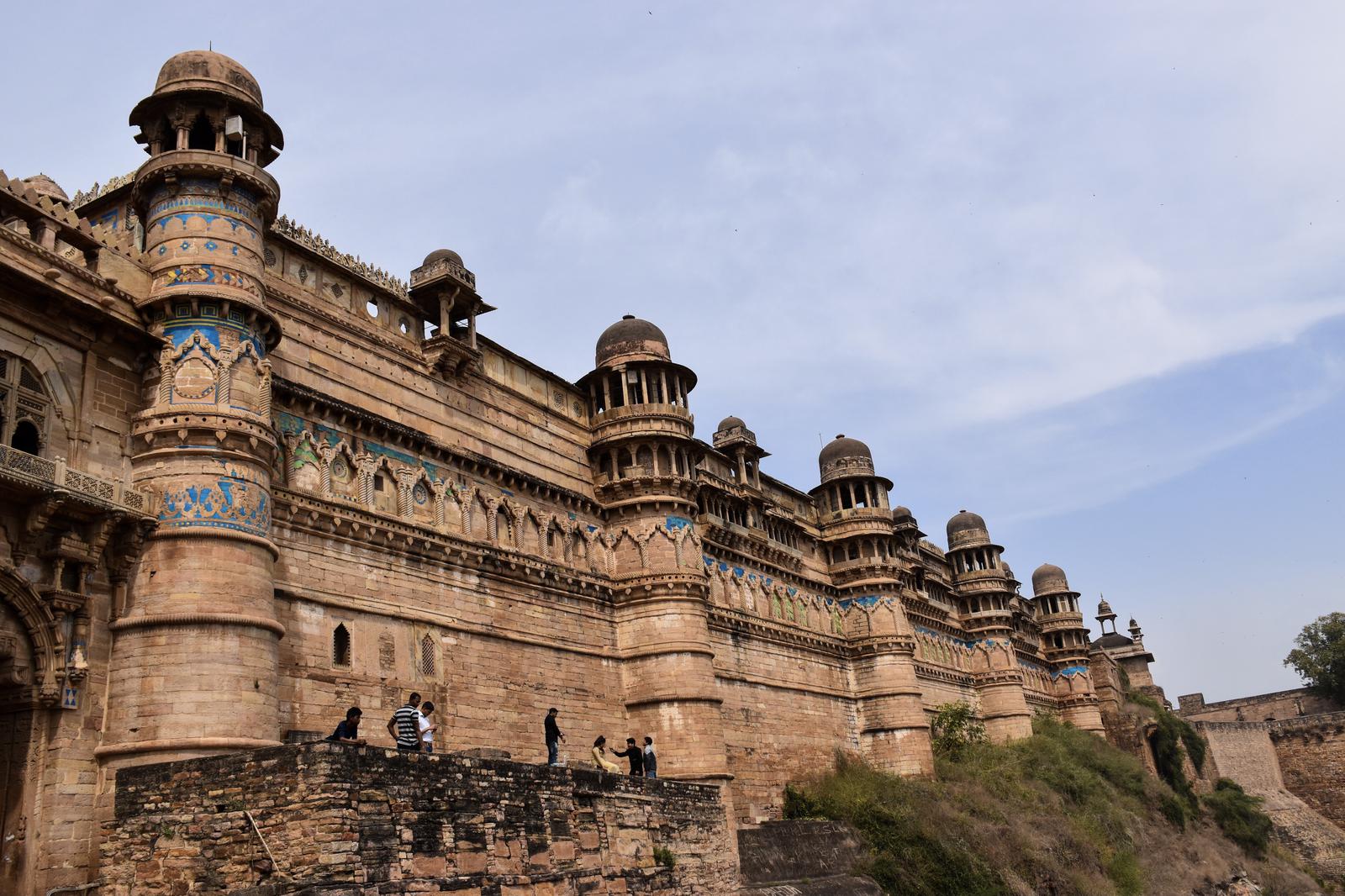
Perched 300 feet above the plains, the Gwalior Fort is a "long twisted finger, black and sinister" that has dominated Indian history for over a millennium. Sir Warren Hastings once called it the "key to Indostan," noting that its capture was as significant as the Battle of Plassey. Because of this strategic weight, the fort’s history became a relentless "ping-pong match" of power. It was first seized by the Huns in 515 AD, then passed to the princes of Kannauj, the Kachhwahas, and the Pratiharas. By 1196, Qutubuddin Aibak brought the first Muslim influence to the ramparts. For centuries, the fort was a prize that swung back and forth between ambitious emperors and defiant local chieftains, eventually becoming a point of fierce contention between the British and the Scindia dynasty in the 19th century.
The Gwalior Fort is often described as a "city within a city," housing structures that span a millennium of artistic evolution. The interiors are defined by a contrast between the defensive grit of battlements and the delicate beauty of royal residences.
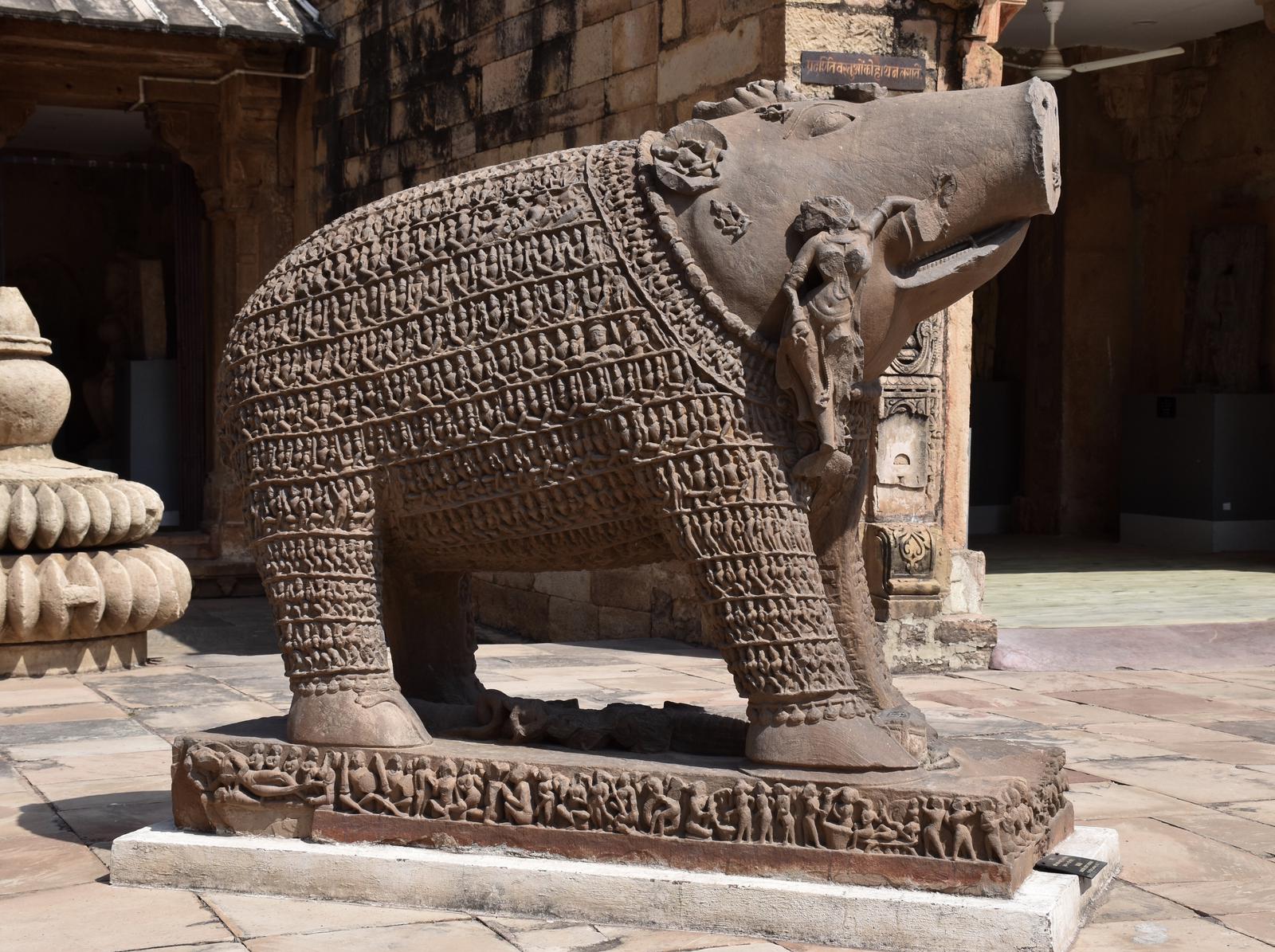
The Man Mandir Palace stands as the most striking residence within the walls. Built by Raja Man Singh Tomar, its southern façade is a masterpiece of ornamentation, featuring glazed tile inlays of colorful ducks, parrots, and crocodiles. Inside, the palace contains a dancing hall and a network of underground passages that transitioned from royal quarters to grim dungeons during the Mughal era. Adjacent to it lies the Vikram Palace, linked to the legacy of the Kohinoor diamond, and the Gujari Mahal. The latter, a testament to the King’s love for his queen Mrignayani, is now an archaeological museum preserving the exquisite Shalbhanjika sculpture and various artifacts dating back to the 1st century A.D.
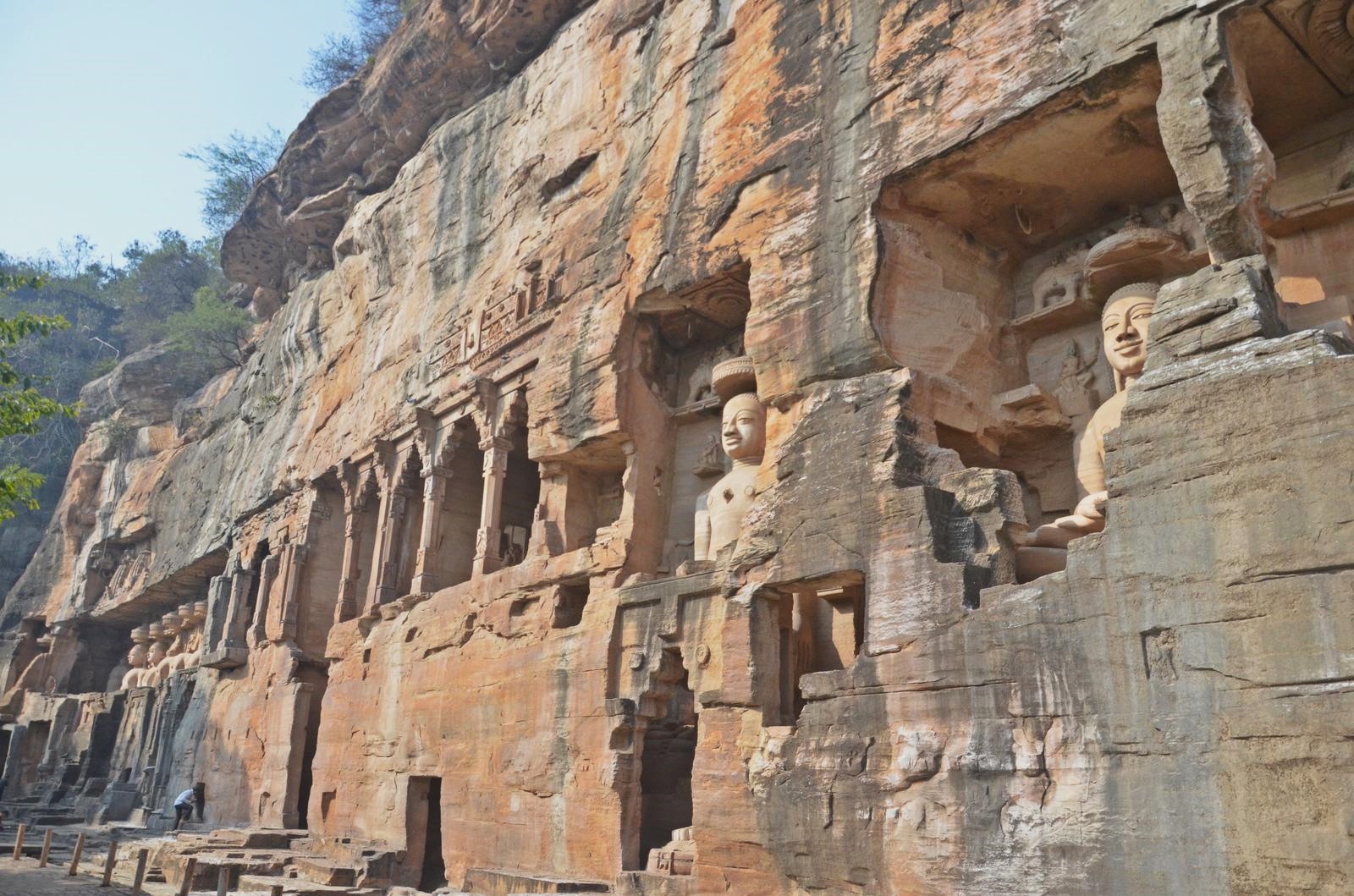
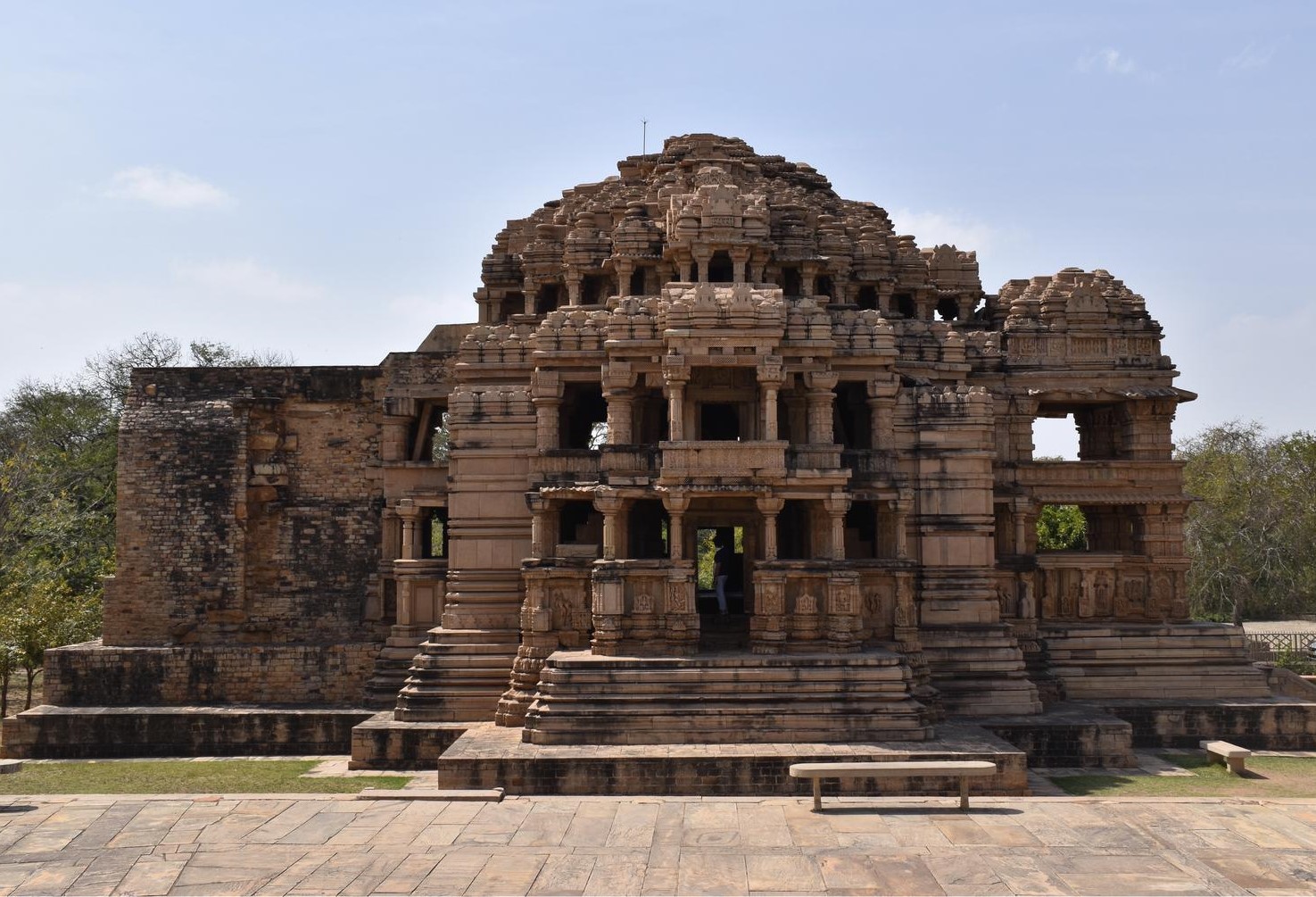
The fort’s religious architecture is equally diverse. Teli ka Mandir is the tallest structure in the complex, reaching 100 feet. Its unique design blends Dravidian and Indo-Aryan styles, featuring intricate carvings of coiled serpents and river goddesses. The Sas-Bahu Temple complex, despite its colloquial name, is dedicated to Sahastrabahu (a form of Lord Vishnu) and Lord Shiva, showcasing the intricate red sandstone carvings of the 11th century. Along the steep cliffs of the Urwahi rock face and Gopachal Parvat, visitors encounter a monumental gallery of 22 Jain Tirthankara sculptures, including a 57-foot standing figure, carved directly into the stone between the 7th and 15th centuries.
Outside the formidable walls, Gwalior transitions into a city of royal legacies and musical shrines, where the influence of the Scindia dynasty and the great maestros remain tangible.
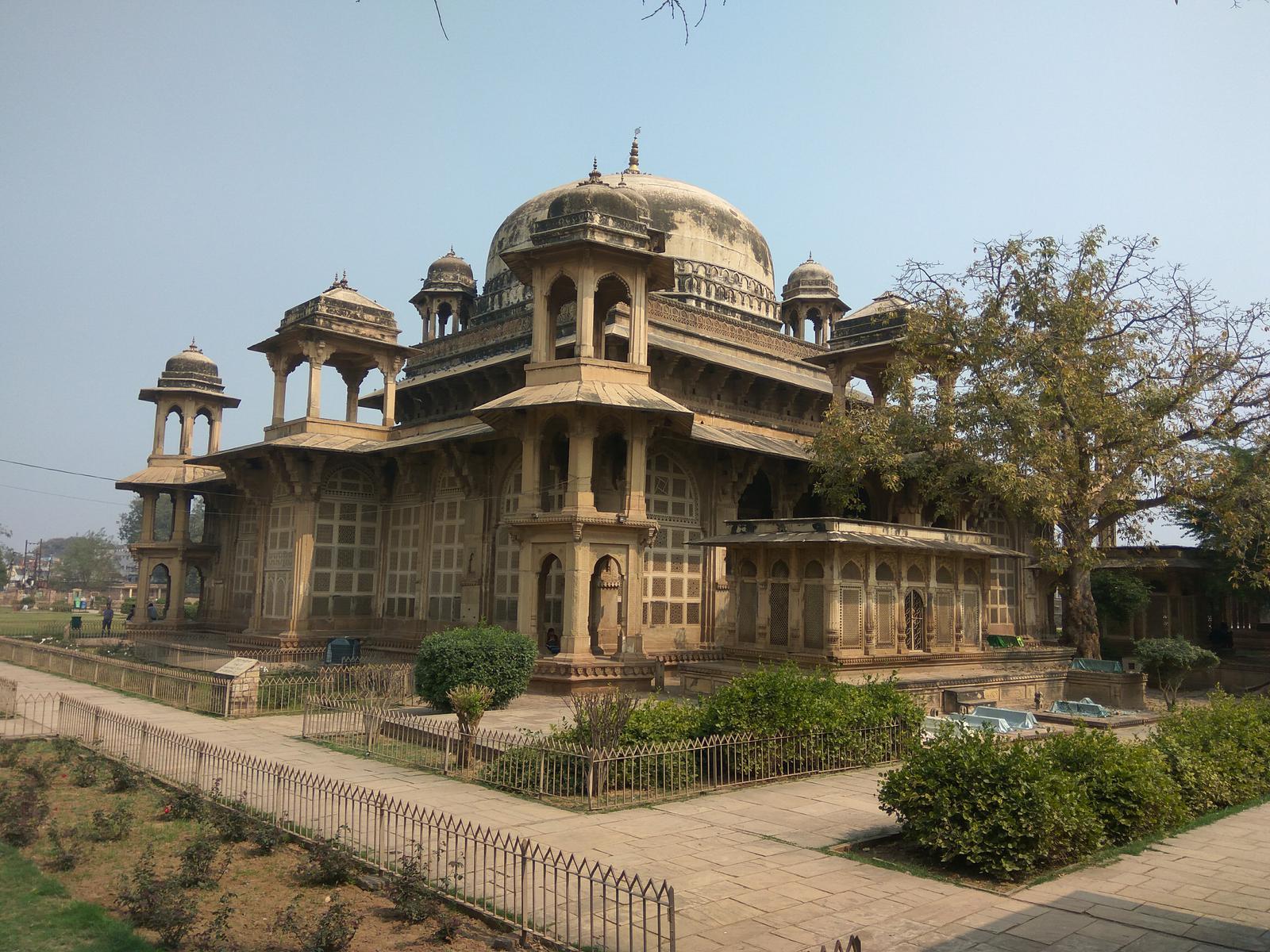
Gwalior’s legacy is written in song as much as stone, born from the 15th-century patronage of Raja Man Singh Tomar and the perfection of the Dhrupad style. As the cradle of Tansen, whose spiritual essence still lingers near the stone-lace mausoleum of his guru, Ghaus Mohammed, the city remains a pilgrimage site for the Gwalior Gharana. This narrative of sound evolves through the centuries into the modern era, anchored by the Bangash lineage and the world-renowned Sarod maestro Ustad Amjad Ali Khan. At Sarod Ghar, the family’s ancestral home turned museum, a rare collection of instruments stands as a living testament to Gwalior’s enduring musical soul—a journey from the courtly power of ancient vocals to the emotive resonance of the sarod’s strings.
The allure of Gwalior extends far beyond its formidable ramparts, serving as a gateway to a landscape where nature and history converge in quiet, powerful ways. For those looking to venture beyond the city limits, the surrounding region offers excursions that trade the echoes of the fort for the whispers of the river and the solitude of ancient ruins.
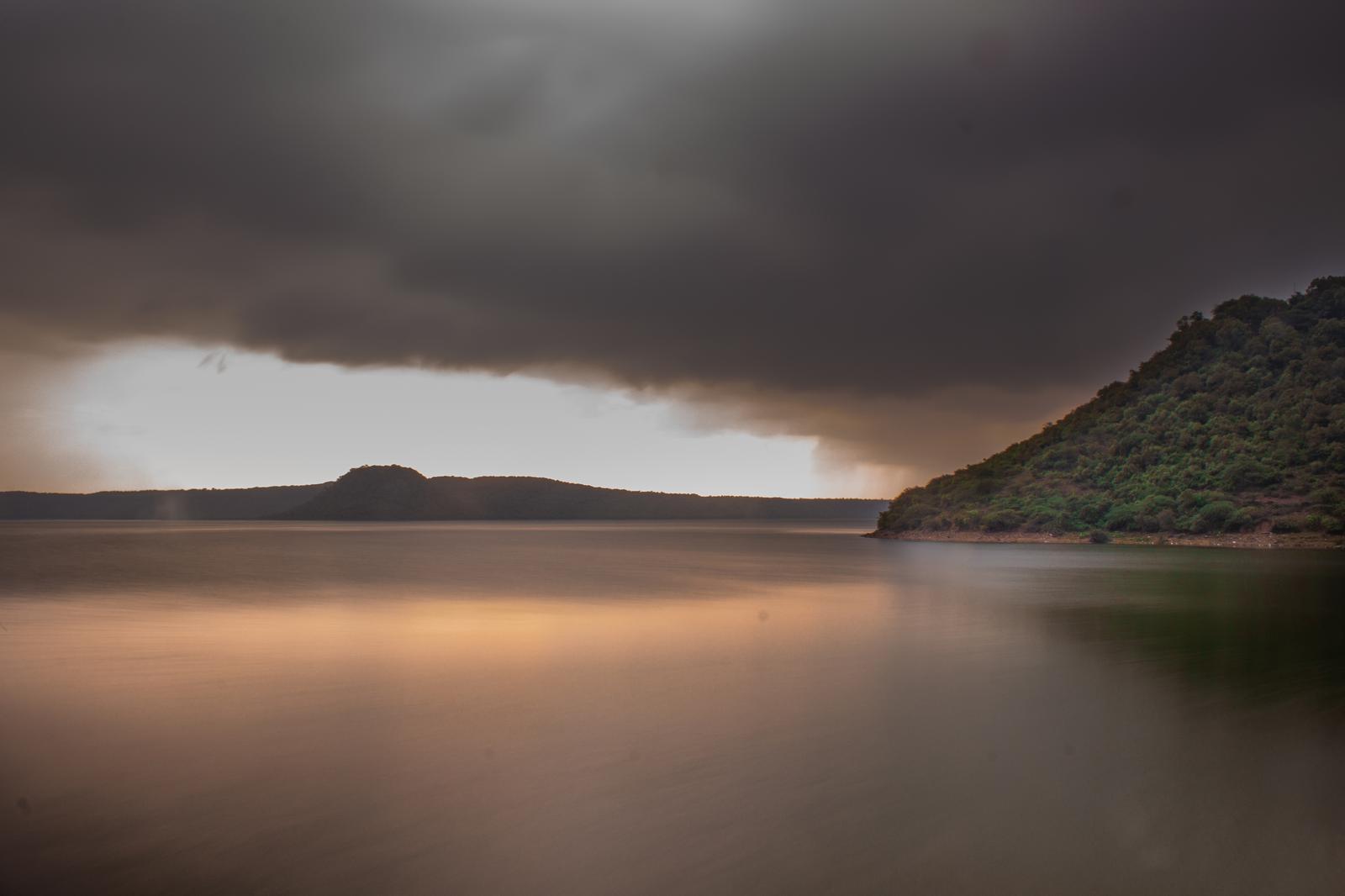
A short journey toward Morena reveals the National Chambal Sanctuary, where pristine waters carve through deep ravines once ruled by outlaws. A boat safari offers a glimpse into a prehistoric world, featuring the rare Gharial, Mugger crocodiles, and the elusive Gangetic River Dolphin. This vital avian corridor serves as a quiet haven, contrasting the urban energy of Gwalior with the raw rhythms of the natural world.
The Morena district holds architectural secrets like the Chausath Yogini Temple at Mitawali. Perched on a hill, its circular, open-air design is the spiritual ancestor to Delhi’s Parliament House. Nearby, the Garhi Padavali fortress guards a temple entrance so densely carved with mythological tales that it is celebrated as a "miniature Khajuraho," bridging the gap between the mundane and the divine.
Hidden within scrub forests lies the Bateshwar complex, a sprawling labyrinth of nearly 200 mini-temples dedicated to Shiva and Vishnu. Once a pile of rubble lost to the jungle and dacoits, this meticulously restored site now stands as a field of stone spires. Wandering through these 8th-century ruins embodies the essence of slow travel, where time is felt in centuries rather than hours.
To the south, the seven-story Bir Singh Dev Palace in Datia dominates the horizon, a gravity-defying marvel of stone and brick built without iron or wood supports. Its symmetrical grandeur leads the way to Orchha, where medieval cenotaphs reflect in the Betwa River. Here, local lore and riverside serenity offer a final, poetic chapter to the Gwalior excursion.
As the era of medieval warfare transitioned into the colonial age, the Scindia family left an indelible mark on the city’s skyline. The Jai Vilas Palace stands as a testament to 19th-century opulence, blending Italian, Tuscan, and Corinthian styles. Inside the grand Darbar Hall, two massive chandeliers—so heavy that ten elephants were used to test the roof's strength—illuminate gilt-accented ceilings and Persian rugs. Here, the famous silver dining train once ferried champagne around the royal table, symbolizing a shift from the rugged survival of the fort to the refined luxury of the modern era.
Today, as the sun sets over the "jagged-toothed battlements," the history of Gwalior is no longer told through the roar of cannons, but through a symphony of light and sound. The voices of legends narrate the tales of the Rani of Jhansi’s tenacity and the transition from ancient "Gopa Parvat" to a modern city. From the 7th-century Jain Tirthankaras carved into the Urwahi rock face to the 1988 Sun Temple inspired by Konark, Gwalior remains a place where every stone holds a story of a Maharaja, a Mahatma, or a Melody.