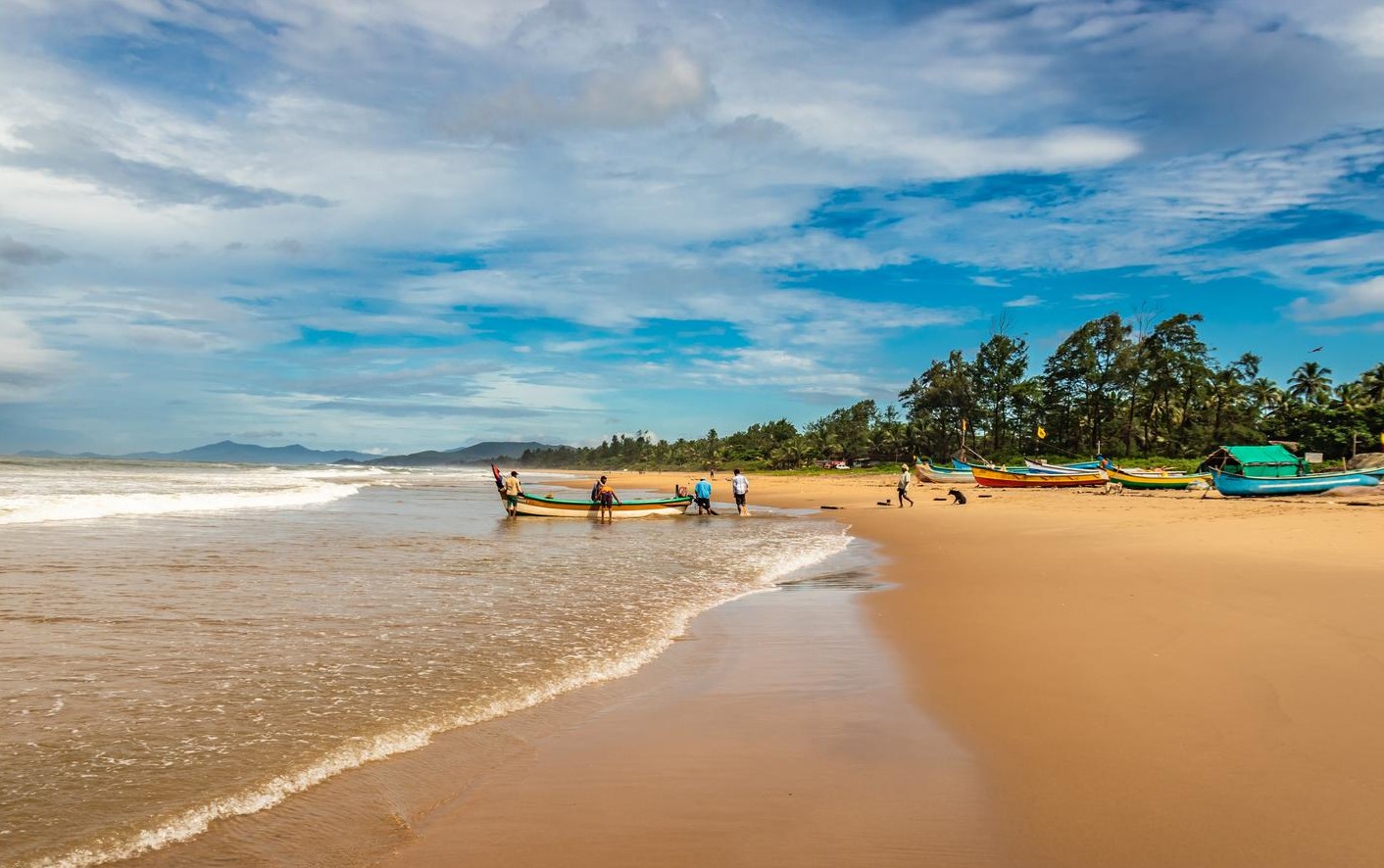

The western coastline of Karnataka possesses a distinct, poetic rhythm that remains largely untouched by the frenetic commercialism of more famous coastal strips further north. Here, along the Karavali Coast, the ancient, rain-washed forests of the Western Ghats make a dramatic, sweeping descent to meet the turquoise waters of the Arabian Sea. It is a region of geographic transitions, where rugged cliffside paths give way to calm, river-fed estuaries, and where centuries of history sit quietly alongside an ancient spiritual heritage.
The sacred topography of this coastline is deeply anchored in a singular, grand epic from the Ramayana. Mythological lore tells us that the demon king Ravana performed intense penance to obtain the ultimate Atmalinga - the soul-lingam of Lord Shiva - to bring back to Lanka. Yielding to his devotion, Shiva granted the boon but gave a strict condition: if the lingam ever touched the earth, it would become permanently rooted to that spot. Terrified of the cosmic imbalance this would cause, Lord Vishnu and Lord Ganesha conspired to trick Ravana as he neared the coast. By creating the illusion of dusk, they compelled him to perform his evening prayers, and Ganesha, disguised as a young cowherd, offered to hold the heavy artifact.
The moment Ravana stepped away, Ganesha placed the lingam firmly upon the ground. In a furious, desperate attempt to wrench it back up, Ravana shattered the sacred relic. The fragments flew across the landscape, and the places where these pieces fell became the foundation for the most significant temples of the region. For the traveler seeking an immersive escape into nature, this coastal corridor offers two contrasting worlds bound by a single highway: the serene, island-dotted waters of Karwar and the wild, cliff-bound bays of Gokarna.
At the northernmost tip of the Karnataka coastline, where the border blurs with Goa, lies the historic port town of Karwar. Defined by the mighty Kali River opening into a magnificent natural harbor, this deep-water bay has drawn maritime travelers for centuries. Arab traders knew it as Baithkhol - the "bay of safety" from monsoon seas—while British and Portuguese forces later fortified the hillsides to protect lucrative overland trade routes.
There is a distinct stillness to Karwar that captures the imagination. When a young Rabindranath Tagore visited in the late nineteenth century, the ethereal beauty of the moonlit bay inspired his very first literary drama. Today, the town’s social heart bears his name; Rabindranath Tagore Beach is a wide, dark-golden promenade that creates a timeless tableau at sunset as the sky turns crimson against the silhouettes of local fishing boats.
While neighboring Gokarna holds the epic prize of the struggle with Ravana, Karwar houses the fragments that flew northward during that cosmic display of strength. At the ancient Shree Shejjeshwara Temple, the ornate woven basket covering the sacred relic fell to earth when Ravana tried to violently wrench it away. Unlike bustling pilgrimage sites, this emerald-enclosed retreat retains a deeply meditative stillness, allowing travelers to sit quietly in the shadows of its medieval granite mandapa.
To truly experience Karwar's natural beauty, one must venture into the islands shielding the bay. Just across the estuary lies Devbagh Island, a pristine, boat-accessible sanctuary of casuarina trees and mangroves where calm, clear waters form a playground for kayakers. Further out, the tortoise-shaped Kurumgad Island houses fortification ruins and a hilltop Narasimha Temple dedicated to the fierce incarnation of Lord Vishnu, which draws thousands of devotees every January for a massive annual festival.
Back on the mainland, Karwar's spiritual history takes on a martial character at the Sadashivgad Hill Fort. Here, the seventeenth-century Durga Bhavani Temple - built around 1665 by the legendary warrior king Chhatrapati Shivaji Maharaj - houses a fierce black-stone idol of the Goddess, serving as a sentinel with panoramic views of the river meeting the sea. For a final geographical anomaly, the nearby Tilmati Beach replaces golden shores entirely with fine, smooth black basalt sand, creating a striking contrast against the white foam of the crashing waves.
Karnataka boasts a spectacular 300-kilometer coastline, anchored at its northern pinnacle by Karwar. Driving south toward Mangalore offers one of India’s most magical road trips - a scenic highway pinned between the crashing waves of the Arabian Sea and the verdant slopes of the Western Ghats. For travelers seeking a coastal escape far less crowded than neighboring Goa, Karwar serves up an exquisite menu of beaches, each with its own distinct personality.
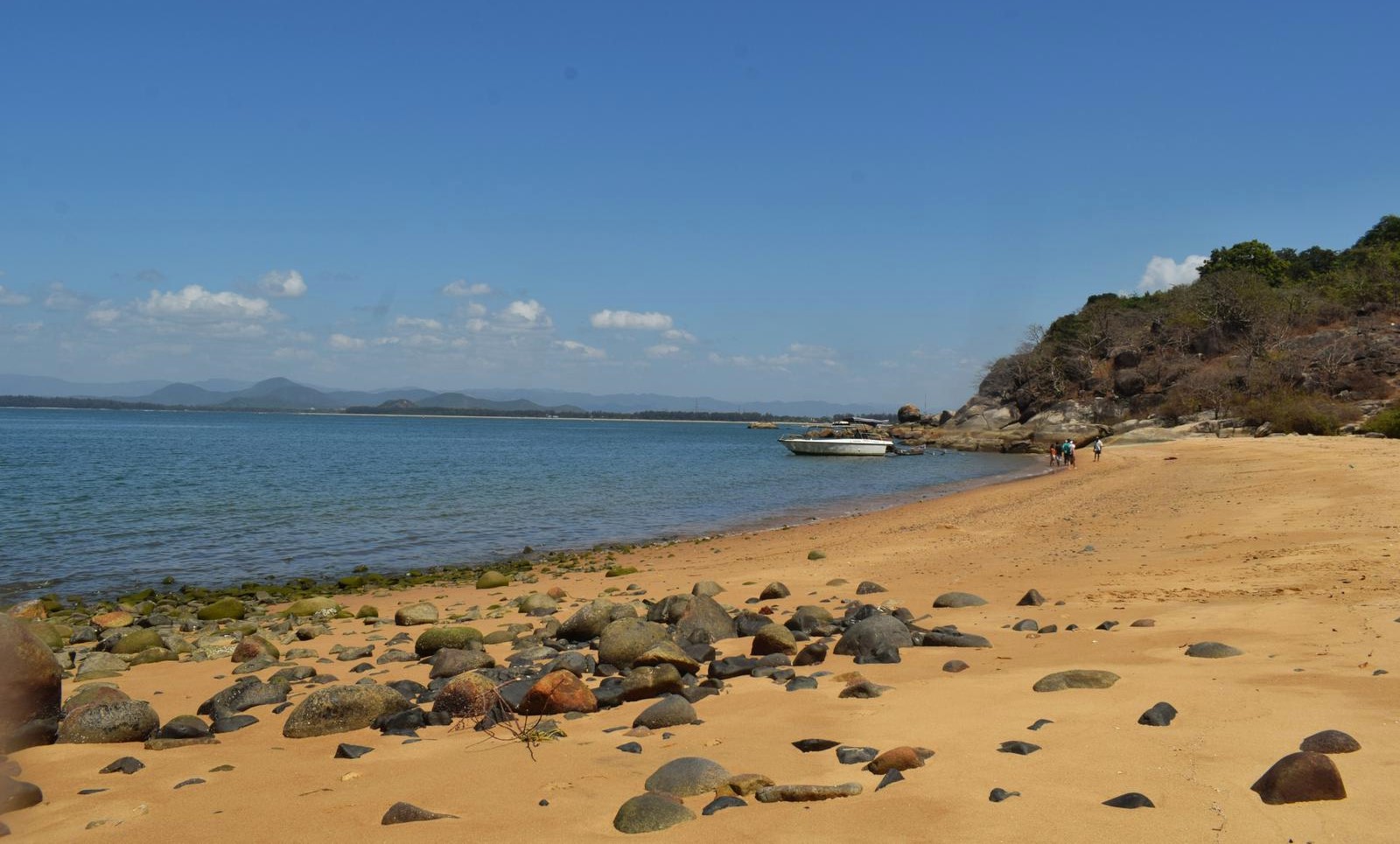
The journey begins at Karwar Beach, the lively heart of the city where golden sands are framed by the majestic Western Ghats, coming alive at evening sunset with local street food and vibrant energy. For pure isolation, a short boat ride reveals Devbagh Island, where dense casuarina plantations and mangroves offer a rare blend of high-adrenaline water sports and quiet solitude. Nearby, Paradise Beach lives up to its heavenly name with immaculate white sands, turquoise waters, and vibrant coral reefs perfect for snorkeling.
For introspection, Karwar’s own Om Beach - a quieter cousin to the famous stretch in Gokarna—is shaped like the auspicious spiritual symbol, creating a natural amphitheater perfect for meditation. If you prefer the dramatic and unusual, Tilmati Beach is an absolute must-visit. Named after the local word for sesame seeds, this shore is blanketed in smooth, glittering black pebbles, creating a striking photographic contrast against the crashing white surf.
To connect with the region's maritime past, a boat leads to the crescent-shaped Kurumgad Island, which features the ruins of an old Portuguese fort and a hilltop temple rewarding trekkers with 360-degree ocean views. Back on the mainland, Binaga Beach provides a vibrant window into the daily life of Konkan fishing communities, dotted with colorful wooden trawlers hauling in the day's catch.
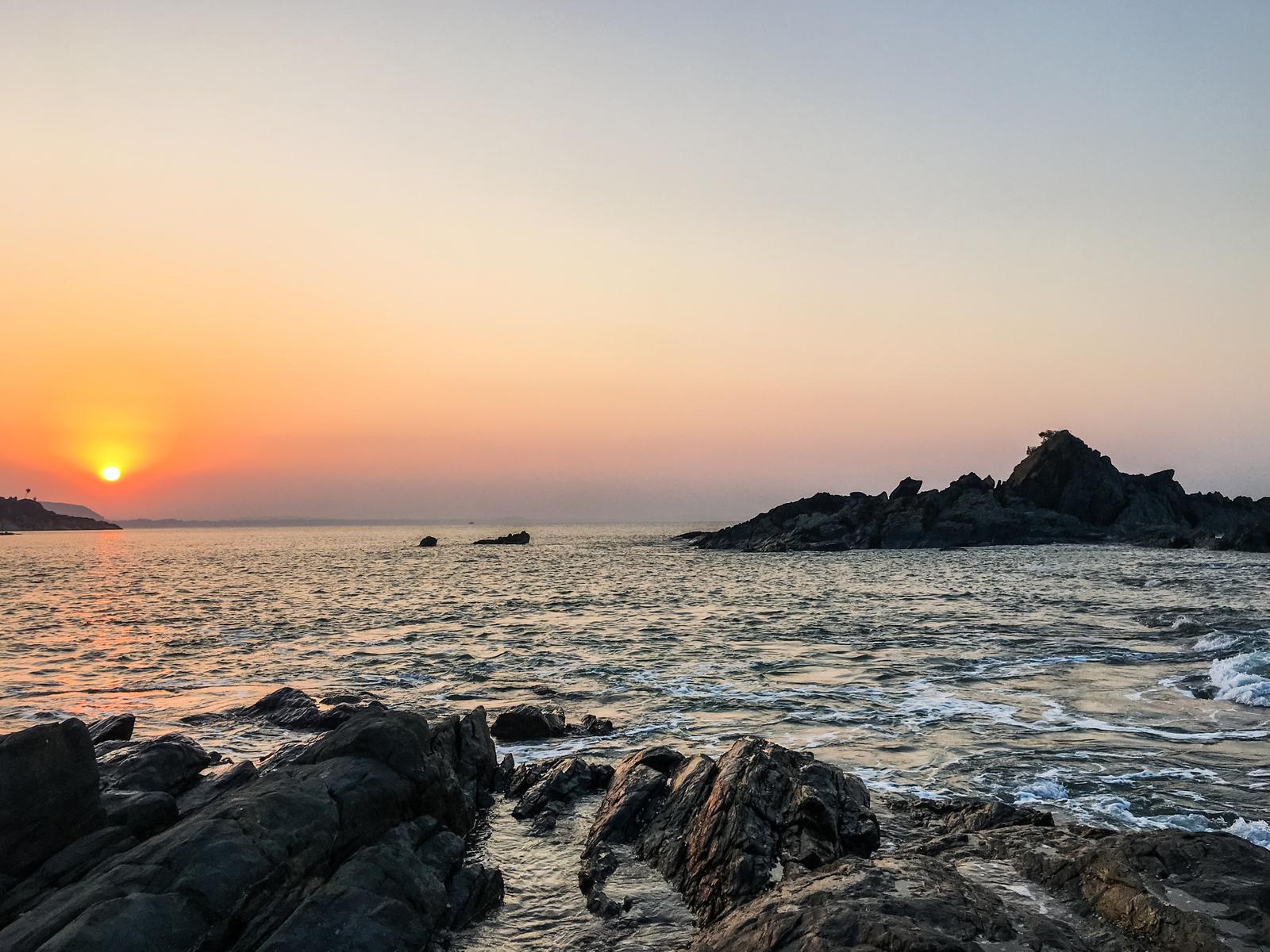
Further off the beaten path lies Majali Beach, a long, untouched shoreline that serves as a protected nesting ground for sea turtles, and Honey Beach, a romantic hideaway tucked behind winding coastal paths. Finally, Devkar Beach offers a fittingly poetic end to the journey, renowned for dramatic evening skies that reflect onto a wide, shallow shoreline like a mirror of brilliant pink, orange, and purple.
Traveling south from Karwar, the flat river estuary quickly transforms into the rugged, vertical headlands of Gokarna. Facing the open Arabian Sea with steep rocky cliffs and deep coves, this dramatic landscape mirrors the town’s split personality: a deeply revered Hindu pilgrimage site and a globally recognized haven for trekkers.
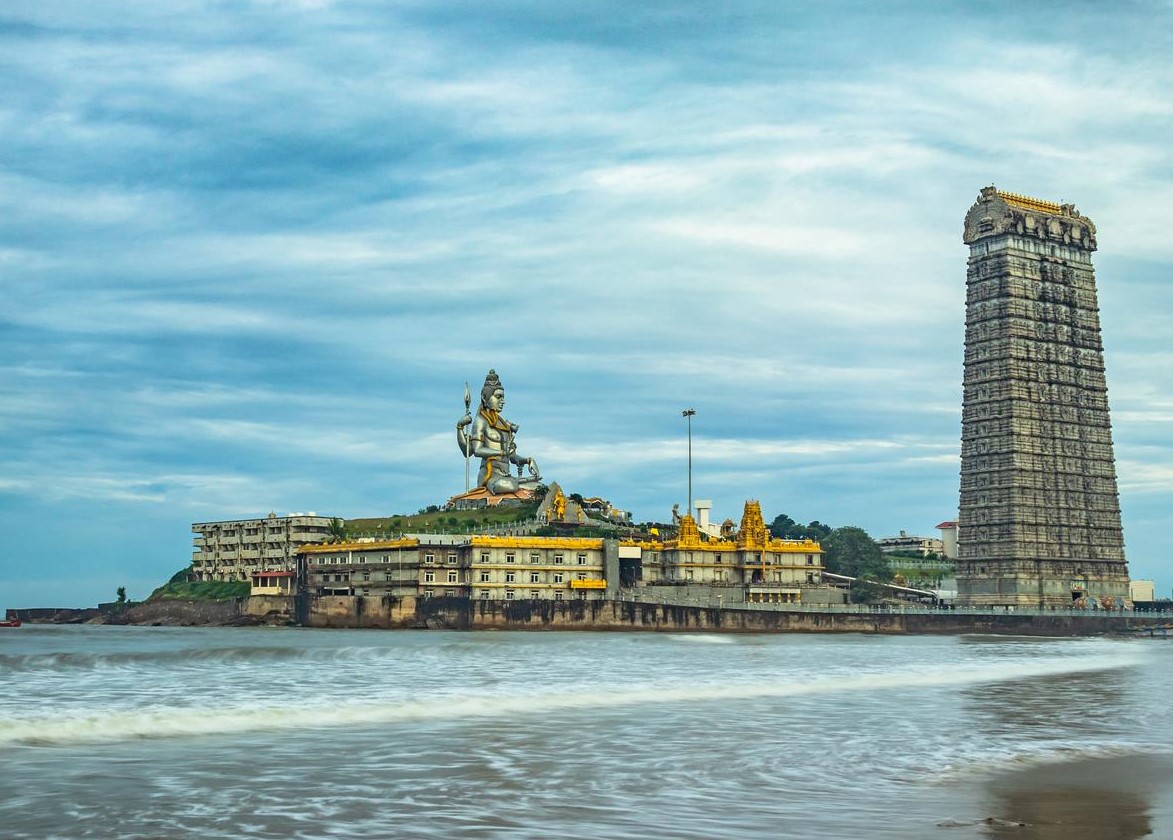
The absolute heart of this sacred geography is the 4th-century Mahabaleshwar Temple, a dark granite masterwork of classical Dravidian architecture built by King Mayurasharma of the Kadamba Dynasty. Facing the roaring waves, it marks the exact spot where the main torso of the Atmalinga - Shiva's soul-relic, remained fixed. Embedded deep within a black stone pedestal, only the very tip is visible to devotees, as the full six-foot relic is unmasked just once every forty years. This immense spiritual power makes Gokarna one of India's seven Muktikshetras, holy places of ultimate salvation.
Complementary shrines complete the sacred ritual. Directly adjacent sits the Maha Ganapati Temple, honoring the deity who outwitted Ravana, where pilgrims traditionally visit first after bathing in the ocean. The unique standing, two-armed Ganesha idol features a small indentation on its crown, mythologically said to be the dent left when a furious Ravana struck the deity. A few steps away, the Tamra Gauri Temple pays homage to Goddess Parvati with an idol holding a delicate balance scale, representing the legendary moment the gods weighed the spiritual virtue of Gokarna against the ancient city of Kashi and found this coastal haven heavier.
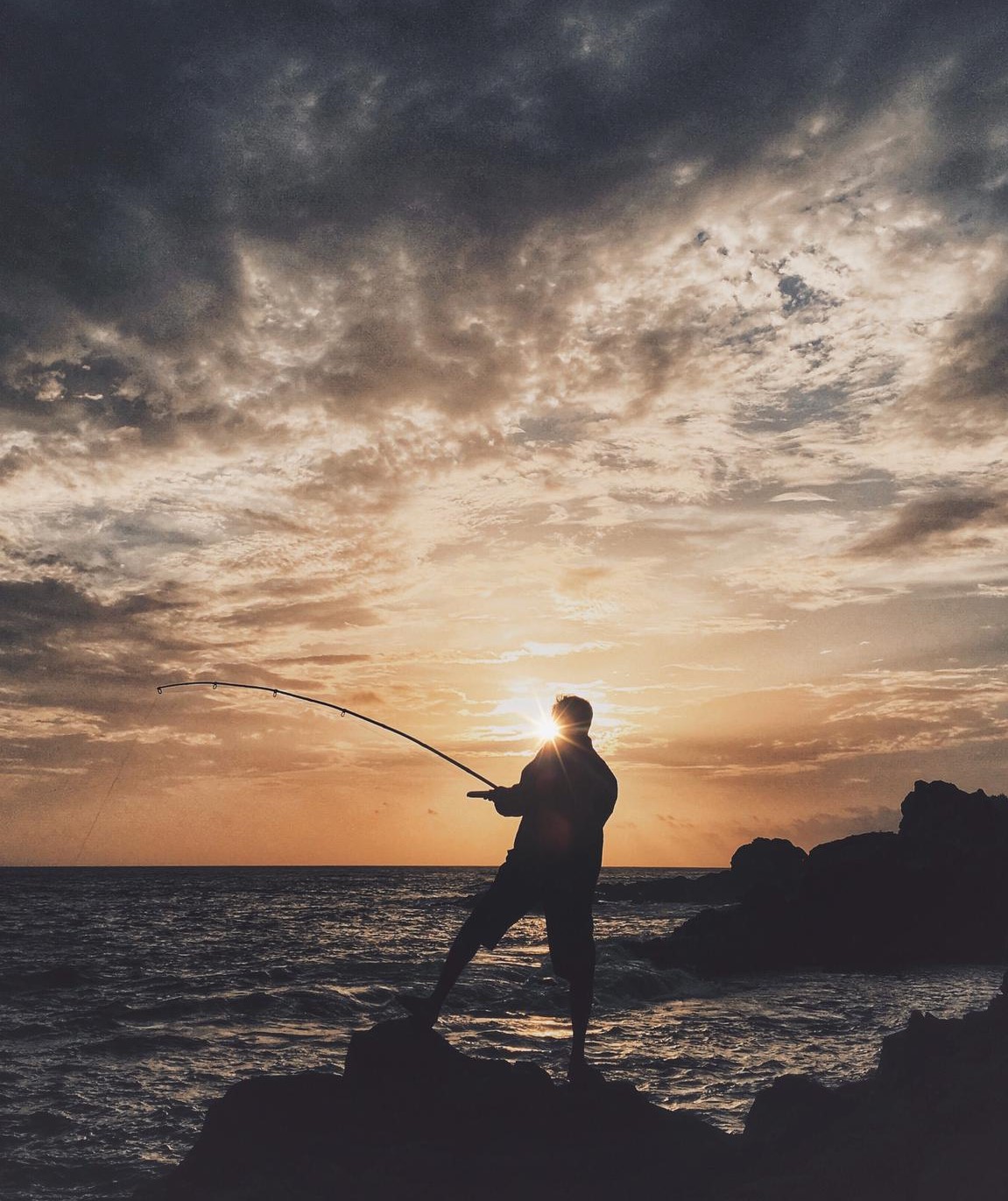
Just over the southern ridge lies Gokarna's secular magic along the Golden Trail, a scenic coastal trek that connects five distinct beaches along the undulating crests of the seaside cliffs. The journey begins at Kudle Beach, a wide, crescent-shaped bay that serves as the town's social hub, lined with simple thatched cafes and open-air yoga shalas where travelers gather to practice mindfulness at sunset. Continuing past Kudle, the trail ascends a steep rocky path to reveal the ultimate icon of the Karavali Coast, Om Beach, named because its natural geography features two sweeping inlets that join to form the distinct shape of the sacred Sanskrit symbol.
For those who press onward, the landscape becomes significantly more rugged and isolated. The trail winds through low coastal forests sculpted by sea breezes before descending onto Half Moon Beach, a tiny, intimate pocket of sand entirely cut off from motorized vehicles that offers a quiet sanctuary for swimming and escaping the crowds. The final stretch of the trek requires navigating a boulder-strewn headland to reach Paradise Beach, an off-grid, minimalist stretch where campers pitch tents beneath the palms, completely disconnected from the digital world and fully immersed in the raw elements of the coast.
The allure of the Karavali Coast extends far beyond its sandy shores. Just a short journey into the dense, hilly hinterlands reveals a collection of natural and historical wonders that speak to the ancient soul of the region. The proximity of the Western Ghats means that within an hour of leaving the beach, a traveler can find themselves completely enveloped by a dense tropical canopy, walking through spice plantations or trekking toward hidden waterfalls.
Perhaps the most astonishing geological feature in the entire state is the Yana Caves, located deep within the damp, forested hills of the Kumta region. Here, two massive, blackened monoliths of solid crystalline karst rock rise vertically out of the jungle floor like giant, jagged spears. Towering over a hundred meters high, these ancient rock formations have been sculpted by millions of years of rainfall and wind, creating a labyrinth of deep fissures, caves, and overhanging formations. A quiet path leads visitors directly through the cool, damp interior of the spires, where wild bees nest in the high crevices and a natural stream trickles through the stone, creating an atmosphere that feels intensely prehistoric and sacred.
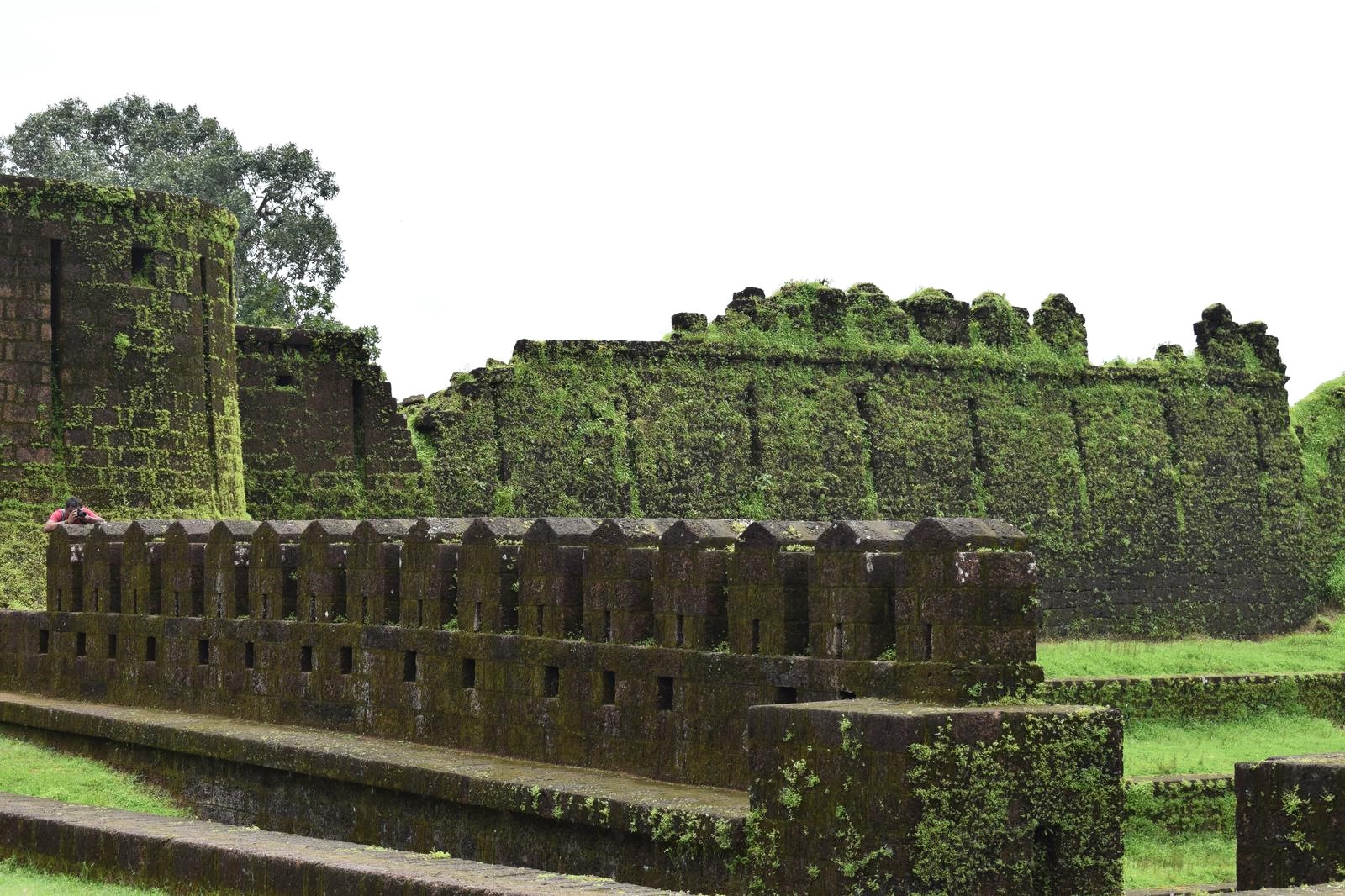
Closer to the shoreline, sitting amidst a network of quiet backwaters, is the magnificent Mirjan Fort. Built entirely out of dark red local laterite stone in the sixteenth century, this sprawling fortress is a masterpiece of military architecture. It was historically commanded by Queen Chennabhairadevi, famously known by Portuguese traders as the "Pepper Queen" because she controlled the global export of the highest-quality spices from these very ports.
During and immediately following the heavy summer monsoons, the entire fort undergoes a breathtaking transformation as every square inch of its massive battlements, watchtowers, and circular bastions becomes carpeted in a thick, vibrant layer of emerald-green moss, making it look less like a man-made structure and more like a natural extension of the landscape itself.