

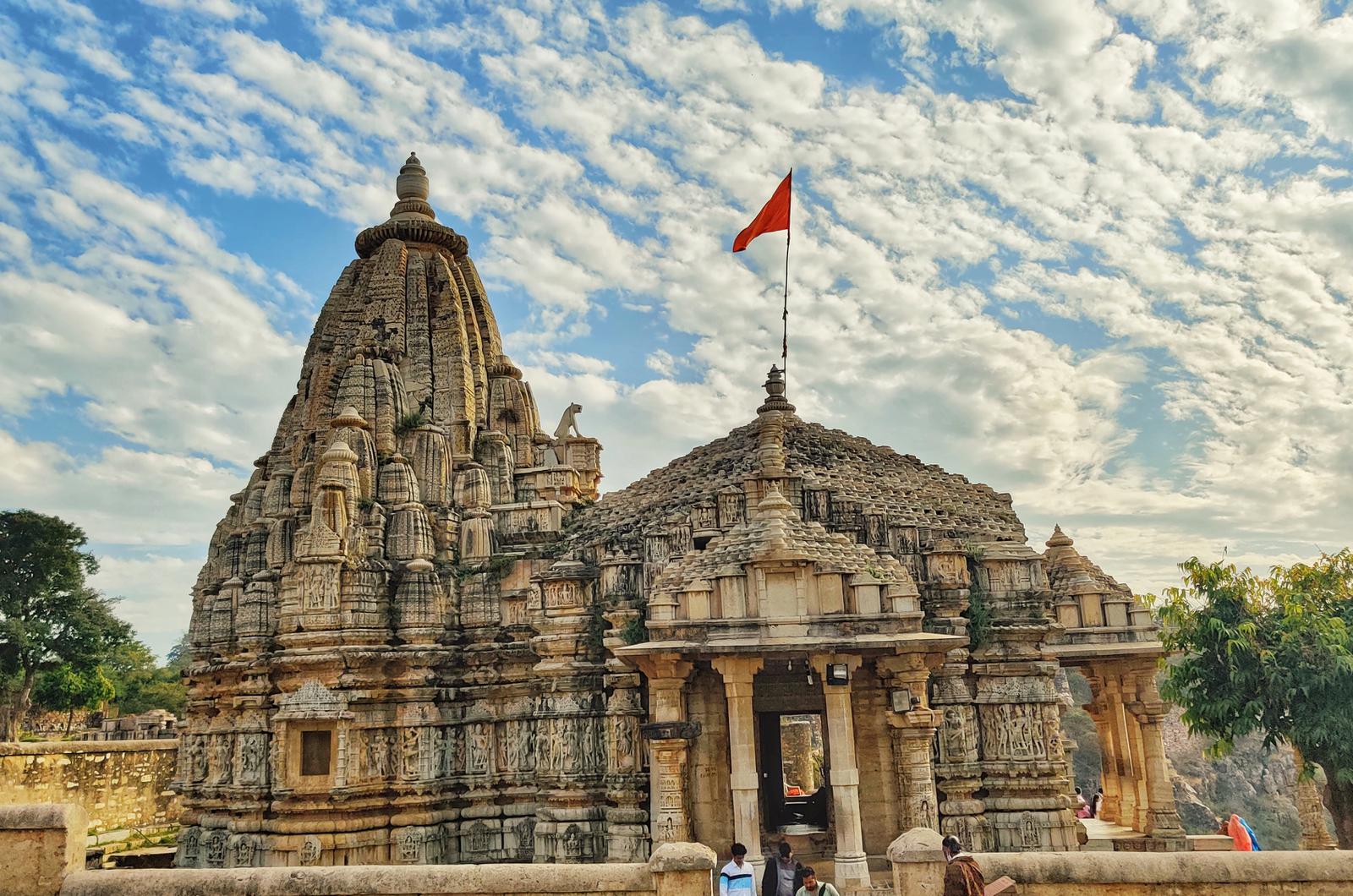
If a stone could speak, the ancient blocks of Chittorgarh and Mandu would not merely recite history; they would sing. Perched on isolated heights in different corners of India, these two legendary fort towns are bound by an unseen umbilical cord of geography, architecture, and intense human drama. Traveling to them feels less like visiting mere tourist destinations and more like stepping onto two grand, atmospheric stages where the epic set pieces of medieval India have been left intact, quietly waiting for the monsoons to wash over them and bring their ghosts back to life.
The High Altitudes of History: Sovereigns of the Plateau
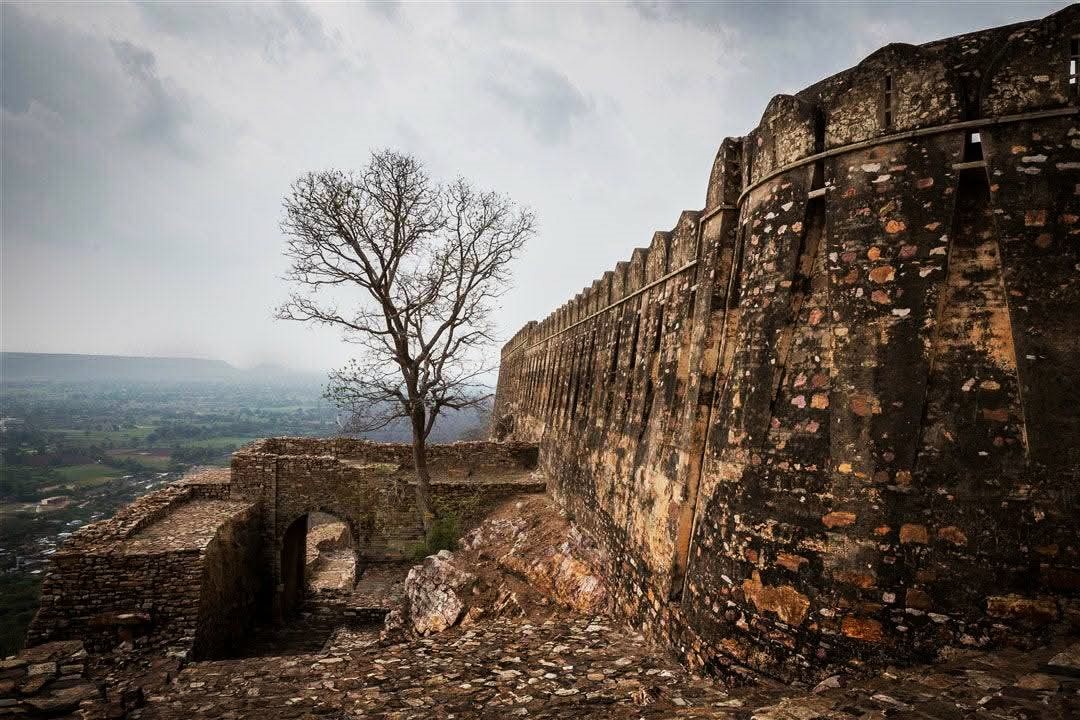
The physical journey to either citadel begins with an ascent that immediately alerts you to their strategic pasts. To reach Chittorgarh, you wind up a massive stone leviathan rising sharply above the plains of Mewar, a rocky plateau stretching nearly five kilometers like a sentinel frozen in time.
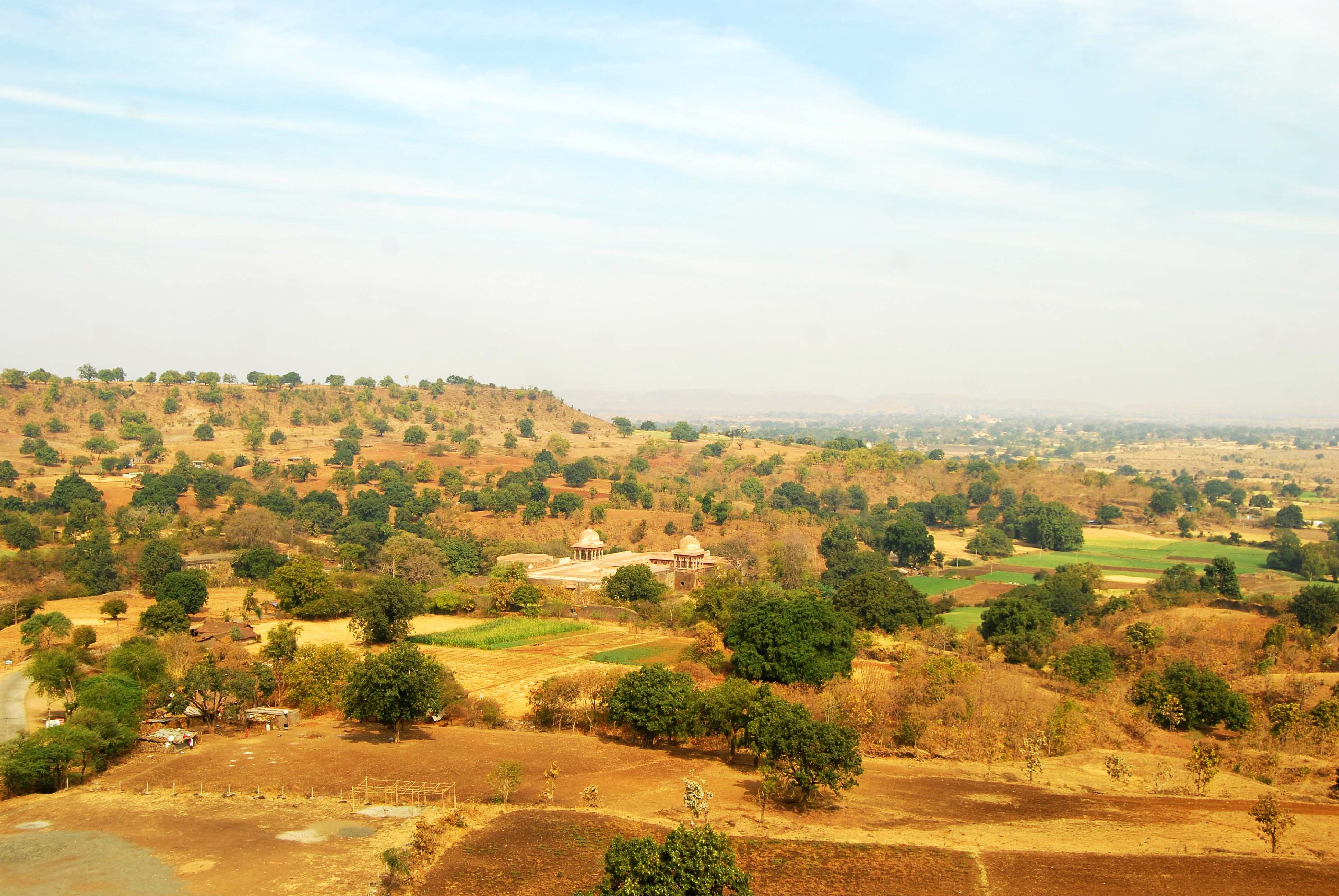
Mandu, nestled in the Vindhya Range of Madhya Pradesh, offers a different kind of drama. It is a spectacular natural fortress cut off from the main Malwa plateau by the Kakra Khoh, a precipitous, yawning ravine that plunges into deep green valleys. Both landscapes dictate an identical truth: these were places designed to be impregnable, where nature’s vertical cliffs served as the first line of defense before a single brick of fortification was ever laid.
Guardians of the Rain: The Medieval Water Kingdoms
Yet, a fortress stranded on a high hill is nothing without water, and it is here that both towns reveal their true engineering genius. They are masterpieces of medieval hydrology, transforming heavy monsoon rains into structural lifelines. Walking through Chittorgarh, it is astonishing to realize that this hilltop once hosted eighty-four distinct water bodies, including stepped ponds, reservoirs, and complex catchment basins.
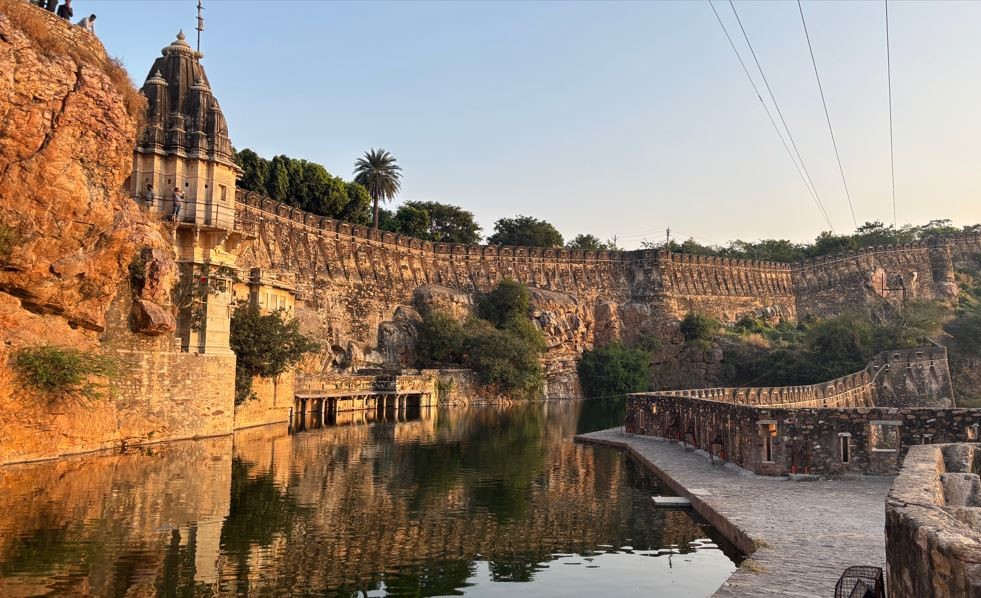
The most mesmerizing of these is the Gaumukh Kund. Standing at its edge, you can watch water continuously trickle from a natural spring carved out of the rock face in the shape of a cow’s mouth. The emerald-green pool sits right at the cliff's precipice, reflecting the heavy stone battlements above. It was this sophisticated network of reservoirs that allowed Chittor to withstand multi-year sieges, sustaining an army of 50,000 souls on water alone.
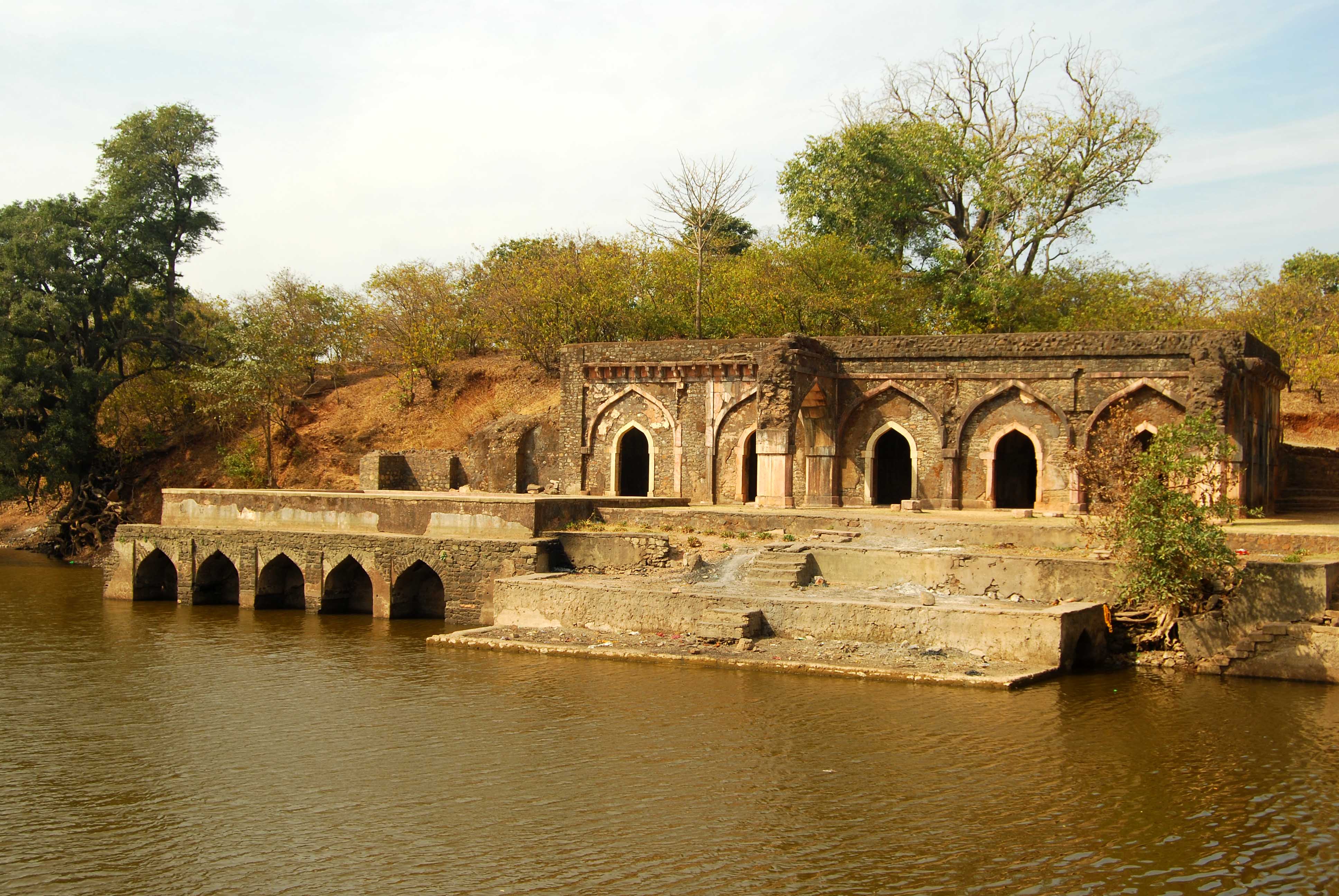
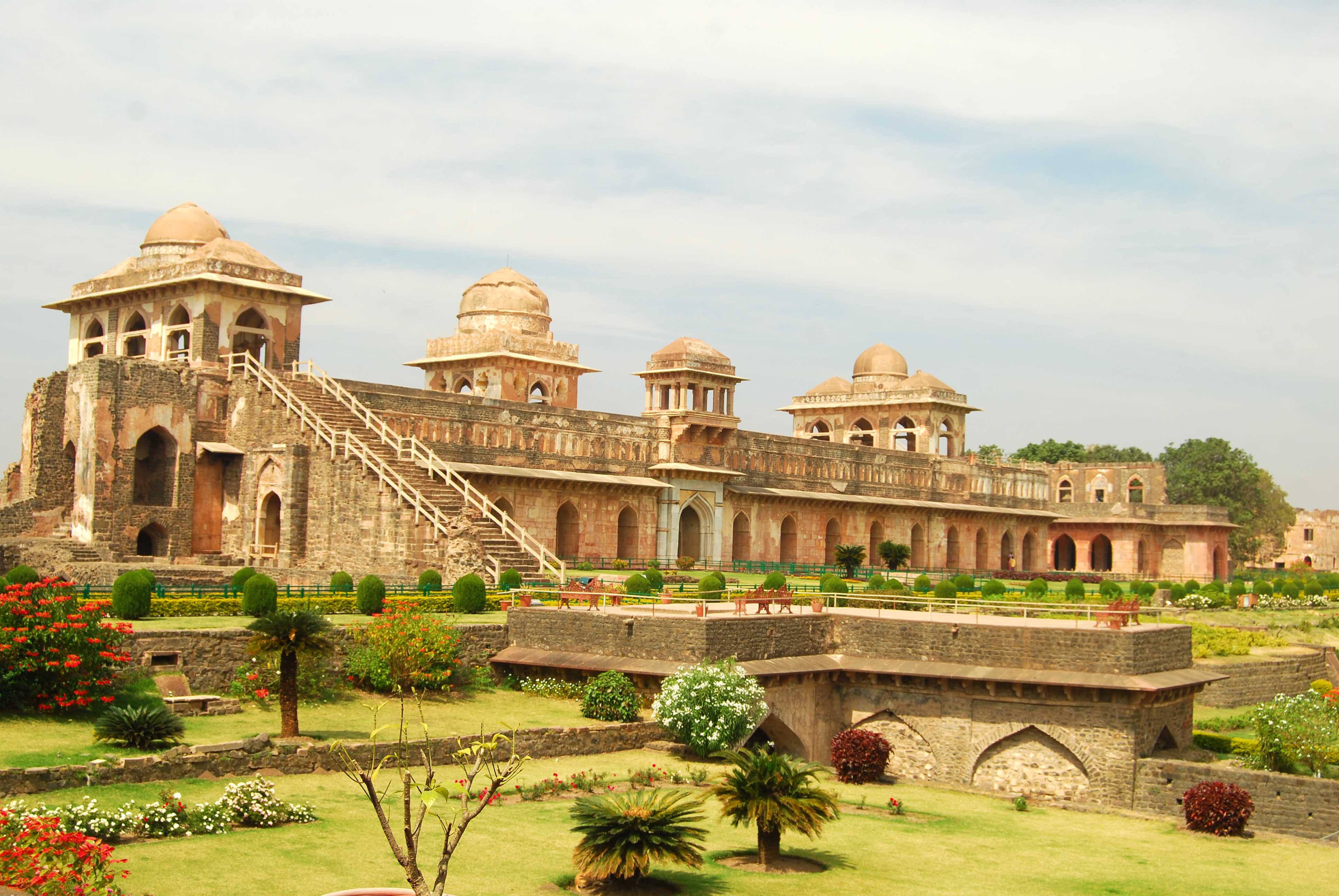
Mandu approaches its watery abundance not just as a defensive necessity, but as a sensory luxury. Known historically as the Shadiabad or City of Joy, its architects built interconnected lakes and palaces that seem to magically float on the horizon during the rains. The pinnacle of this design is the magnificent Jahaz Mahal, or Ship Palace. Sandwiched tightly between two large artificial lakes, the Munj Talao and the Kapur Talao, this double-storied sandstone structure spans over a hundred meters in length.
During the monsoons, when the lakes fill to the brim, the palace mirrors perfectly in the rippling water, giving the distinct visual illusion of a colossal royal vessel anchored at sea. Its open terraces feature elaborate, winding channels where rainwater was harvested and funneled through artistic, spiral aqueducts to fill beautifully patterned swimming pools below.
Two Styles of Stone: Rajput Valor and Sultanate Grace
The architecture of both towns reflects the distinct souls of the dynasties that forged them. Chittorgarh is a symphony of traditional Rajput and Indo-Aryan stone craftsmanship, heavy, defiant, and deeply ornamental. Its skyline is dominated by the breathtaking Vijay Stambha, the Tower of Victory.
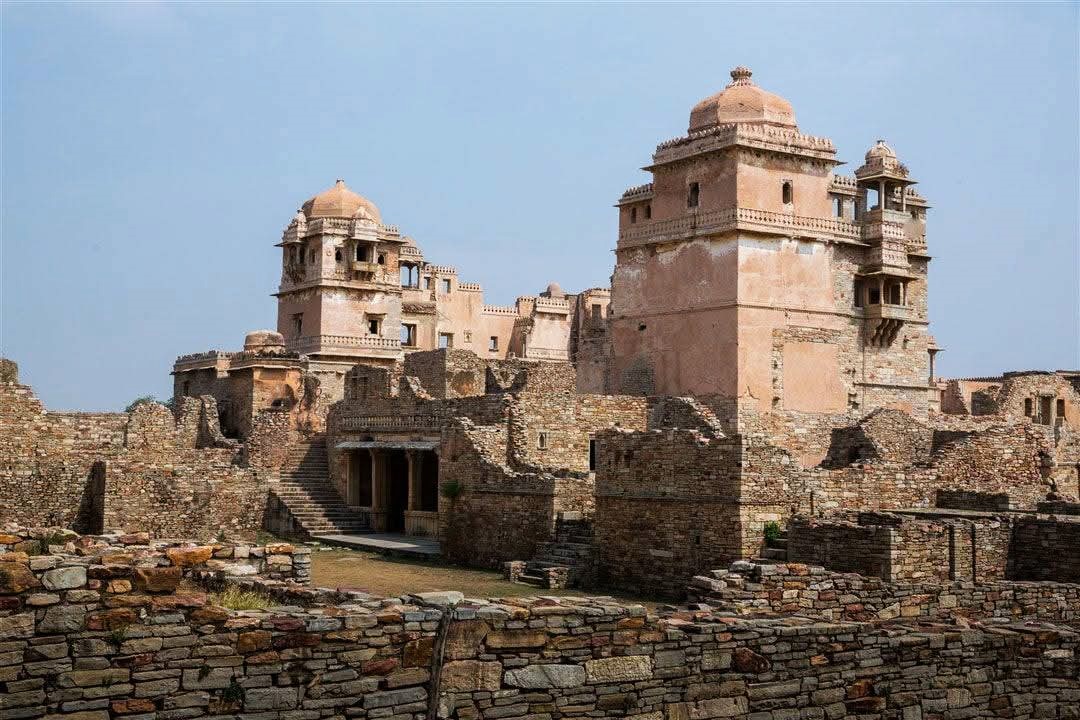
Built by Rana Kumbha in the mid-fifteenth century, this nine-story marvel rises over a hundred feet into the sky, constructed from rich red sandstone and white marble. Every square inch of its exterior is a canvas, intricately carved with detailed sculptures of Hindu deities, celestial beings, and scenes from ancient epics. To climb its narrow, circular interior staircase is to ascend through a vertical gallery of devotion and military pride.
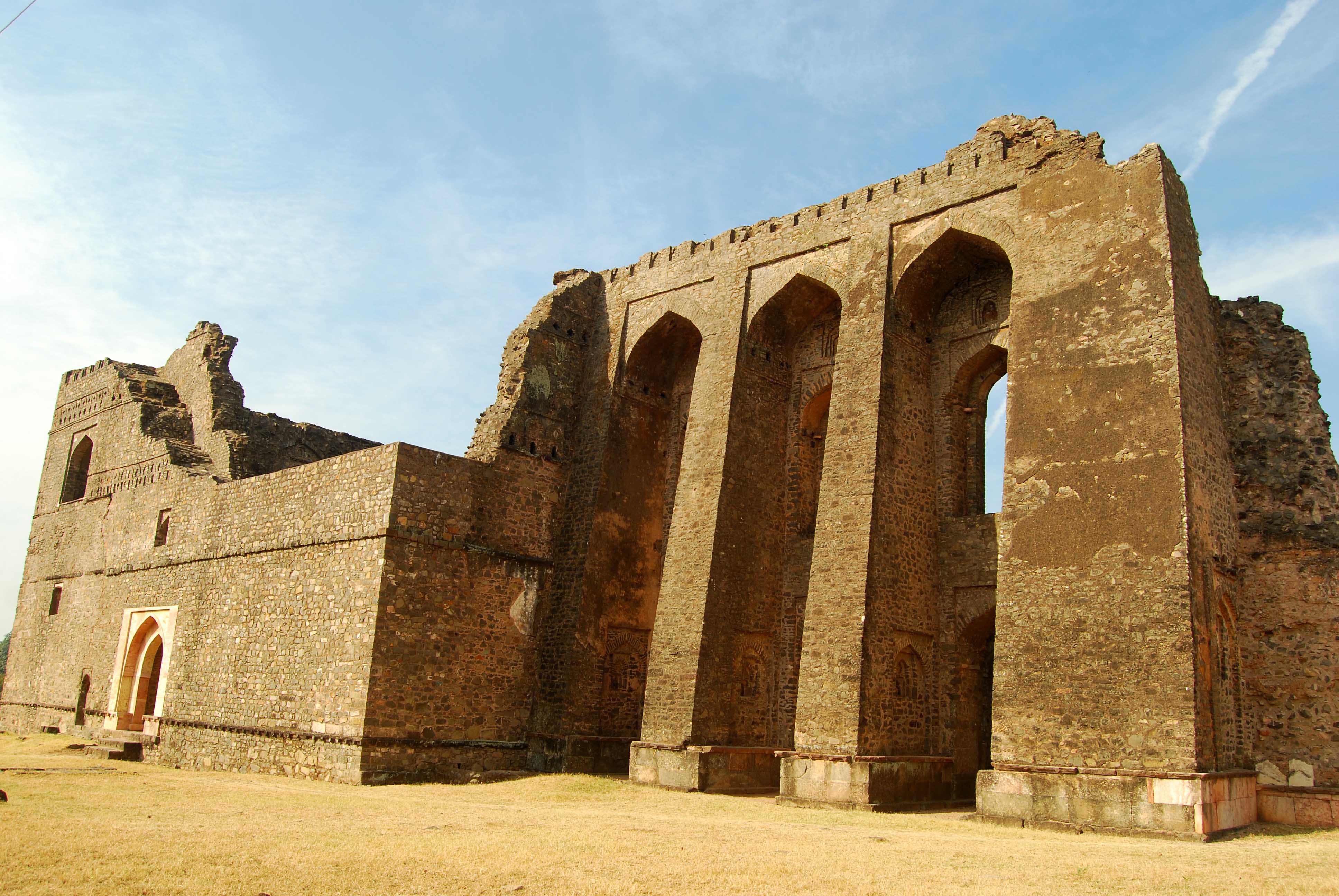
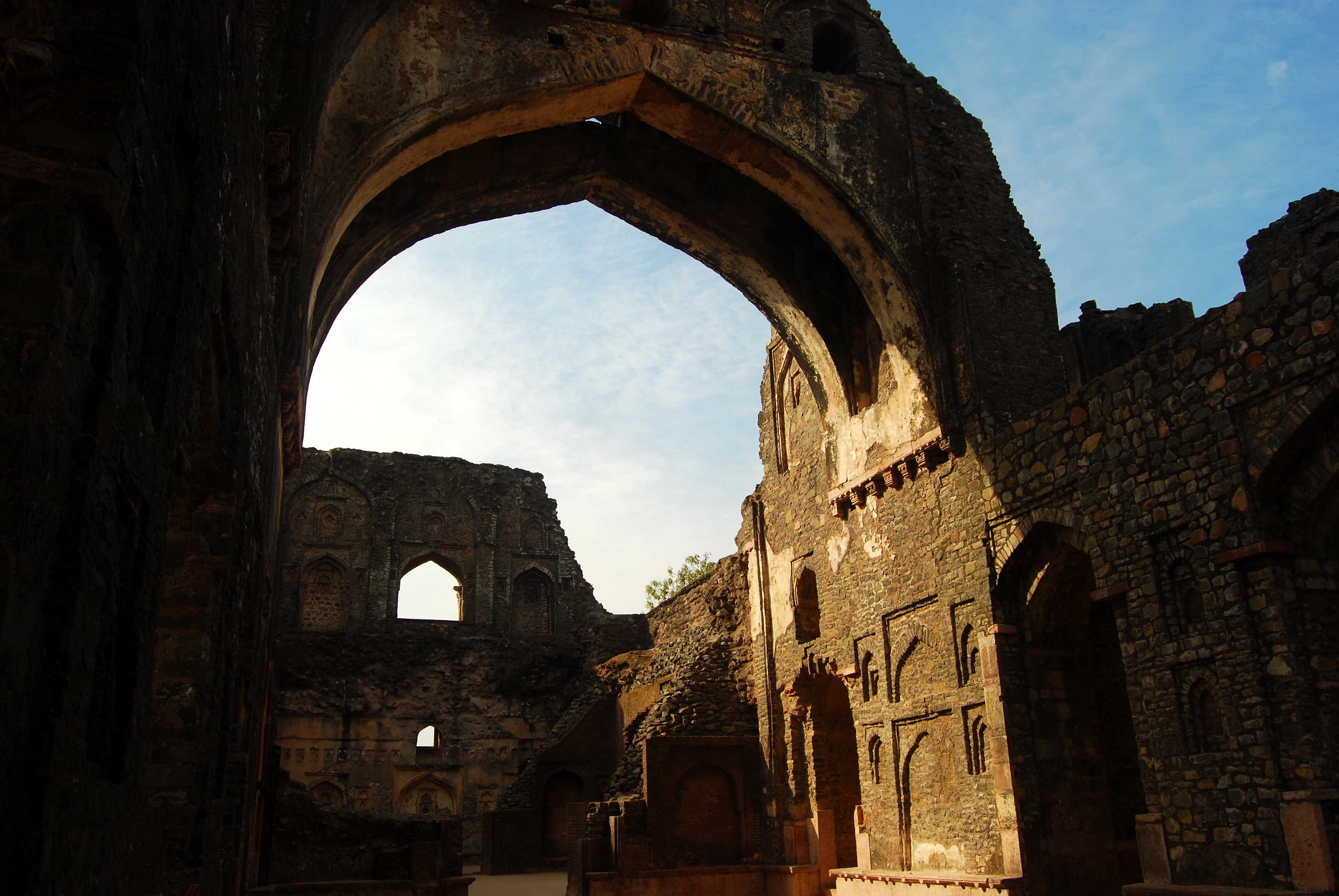
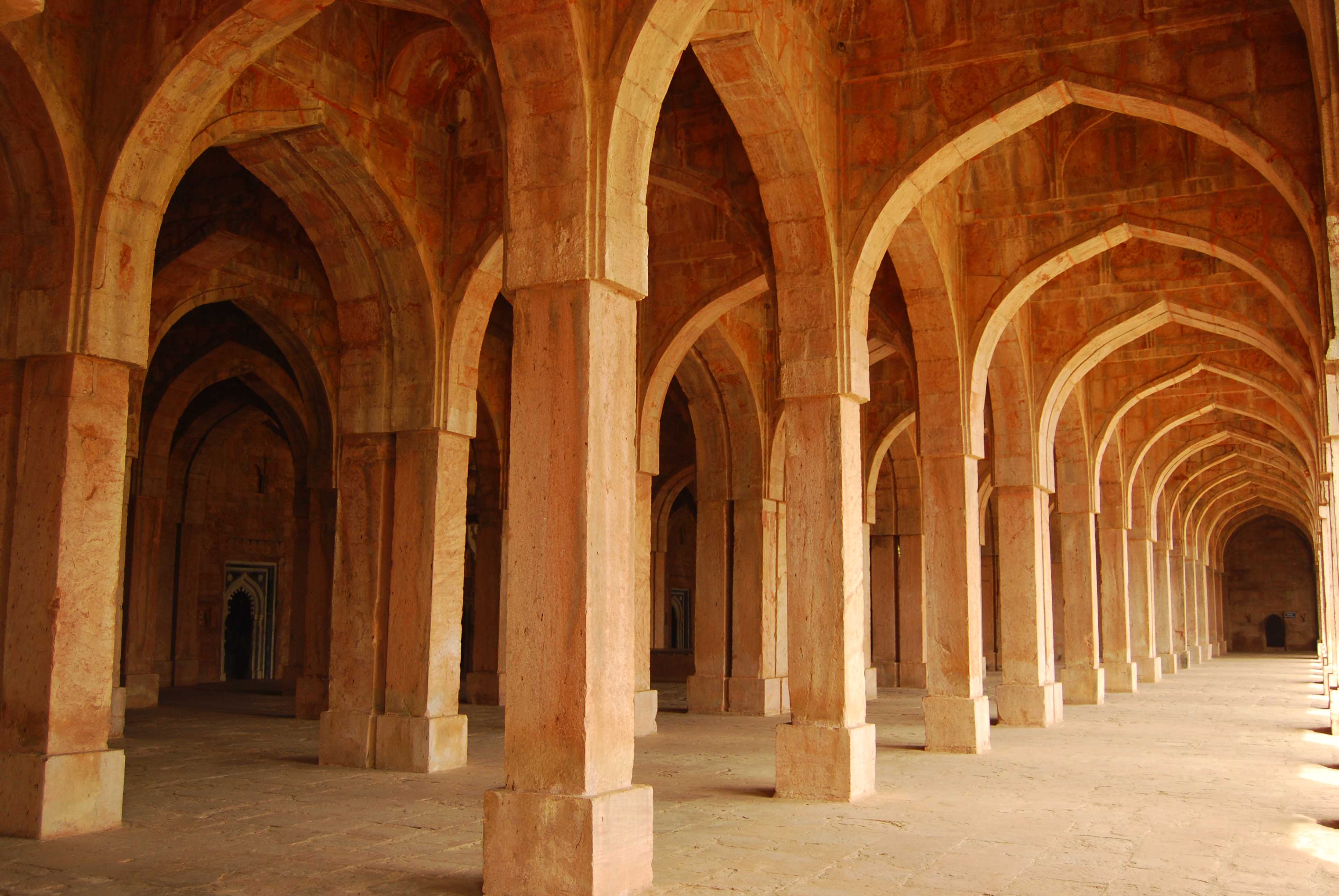
Mandu, by contrast, displays the elegant simplicity and structural lightness of Malwa-Sultanate architecture, a style that would later serve as a blueprint for the grand monuments of the Mughals. Instead of intricate surface carvings, Mandu plays with soaring arches, massive domes, and clean geometric lines.
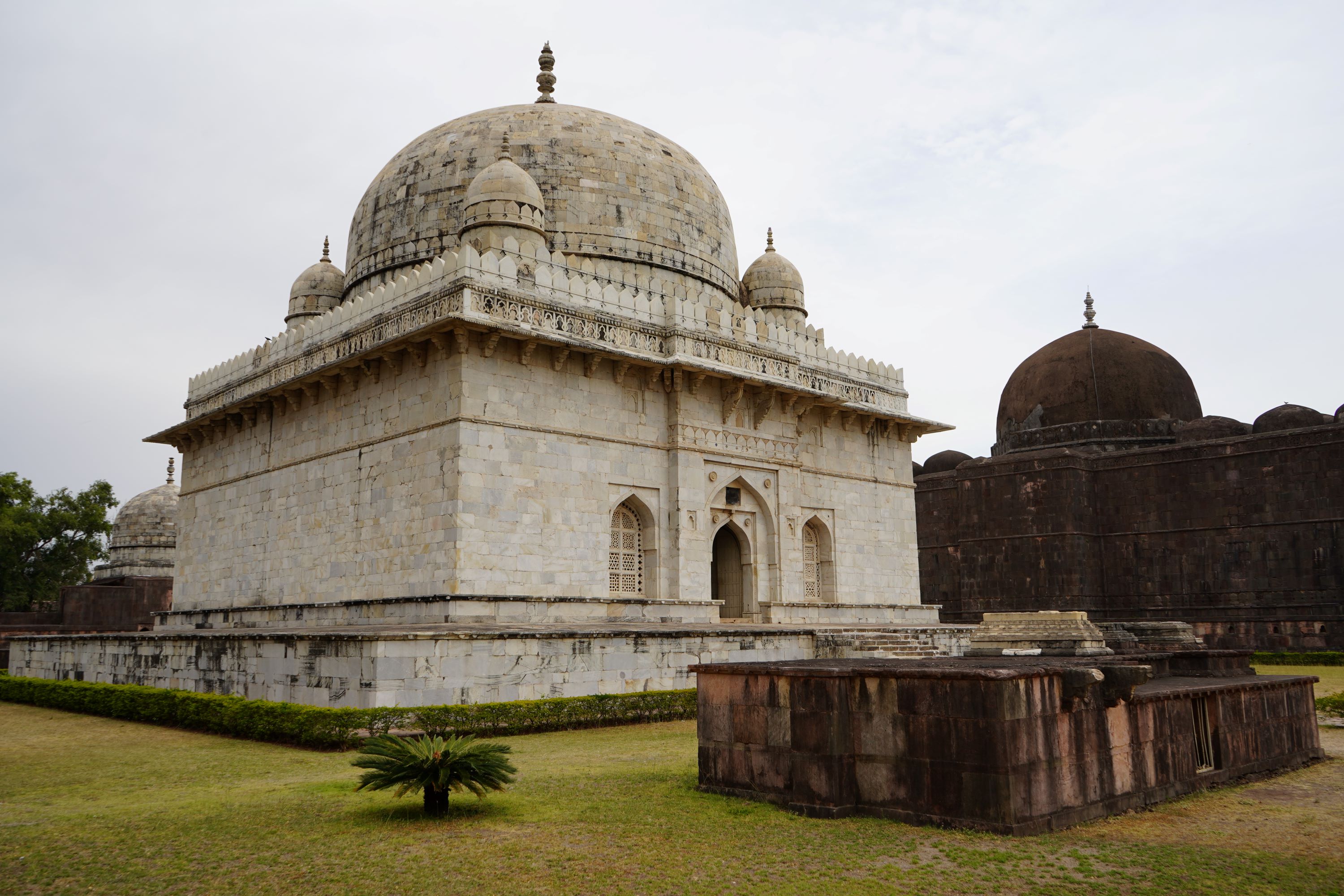
Not far from the floating ship palace stands Hoshang Shah’s Tomb, a magnificent structure constructed entirely of white marble. It features a perfectly proportioned dome and delicate marble latticework that filters the afternoon sun into a soft, ethereal glow. Local lore proudly whispers that this very tomb so deeply impressed Emperor Shah Jahan that he sent his chief architects to study its form before constructing the Taj Mahal.
Fire and Melody: The Legends That Refuse to Die
Beneath the stone arches and beside the still reservoirs of both citadels lie stories of romance, sacrifice, and shattering tragedy. The tales of Chittorgarh are written in fire and stubborn honor. The most poignant chapter centers on Rani Padmini, a queen celebrated for her exceptional beauty. Legend says her reflection, caught in a mirror across a lotus pond by the obsessed Sultan Alauddin Khilji, sparked a brutal, cataclysmic siege.
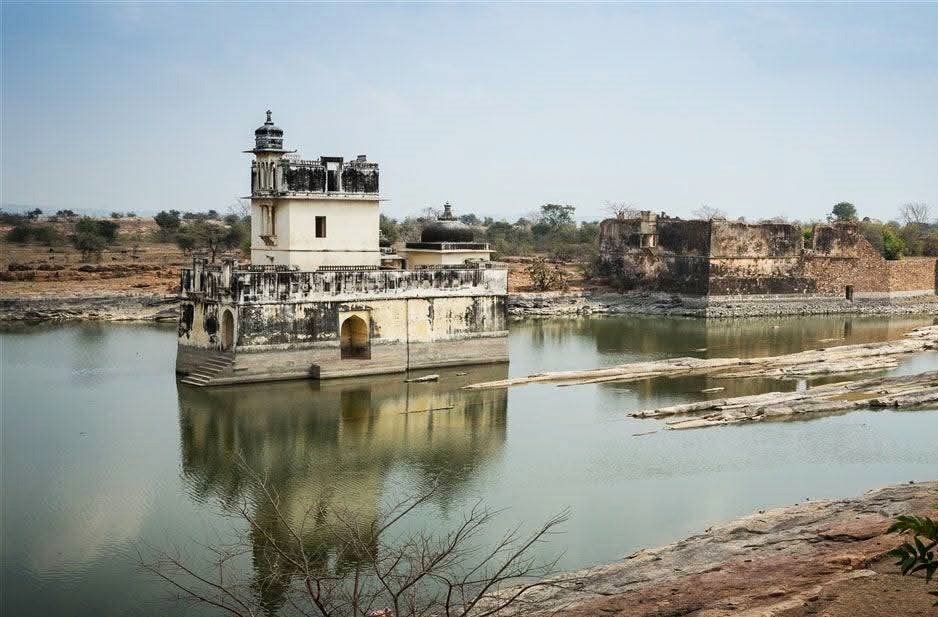
Down by the water sits Padmini’s Palace, a modest, white three-storied pavilion completely surrounded by a water moat. Looking out at it from the watchtower, the heavy silence of the place takes hold. It was here, and in the open fields nearby, that the terrible ritual of Jauhar was enacted. Faced with imminent defeat, Rani Padmini and thousands of the fort’s women chose to walk into massive communal bonfires to preserve their dignity, while the men put on saffron robes and charged down the gates into a fatal final battle. It is a narrative of unyielding defiance that still echoes in every cracked stone of the fortress.
Mandu’s history is woven from entirely different threads—not of martial code, but of poetry, music, and a profound, tragic love. Its ruins belong to Baz Bahadur, the last independent Sultan of Malwa, and his Hindu consort, Rani Roopmati. Baz Bahadur was a passionate musician who cared far more for melodies than the movements of his army, and Roopmati was a village singer blessed with a divine voice. Their lives were an idyllic musical journey spent atop Mandu's high plateau.
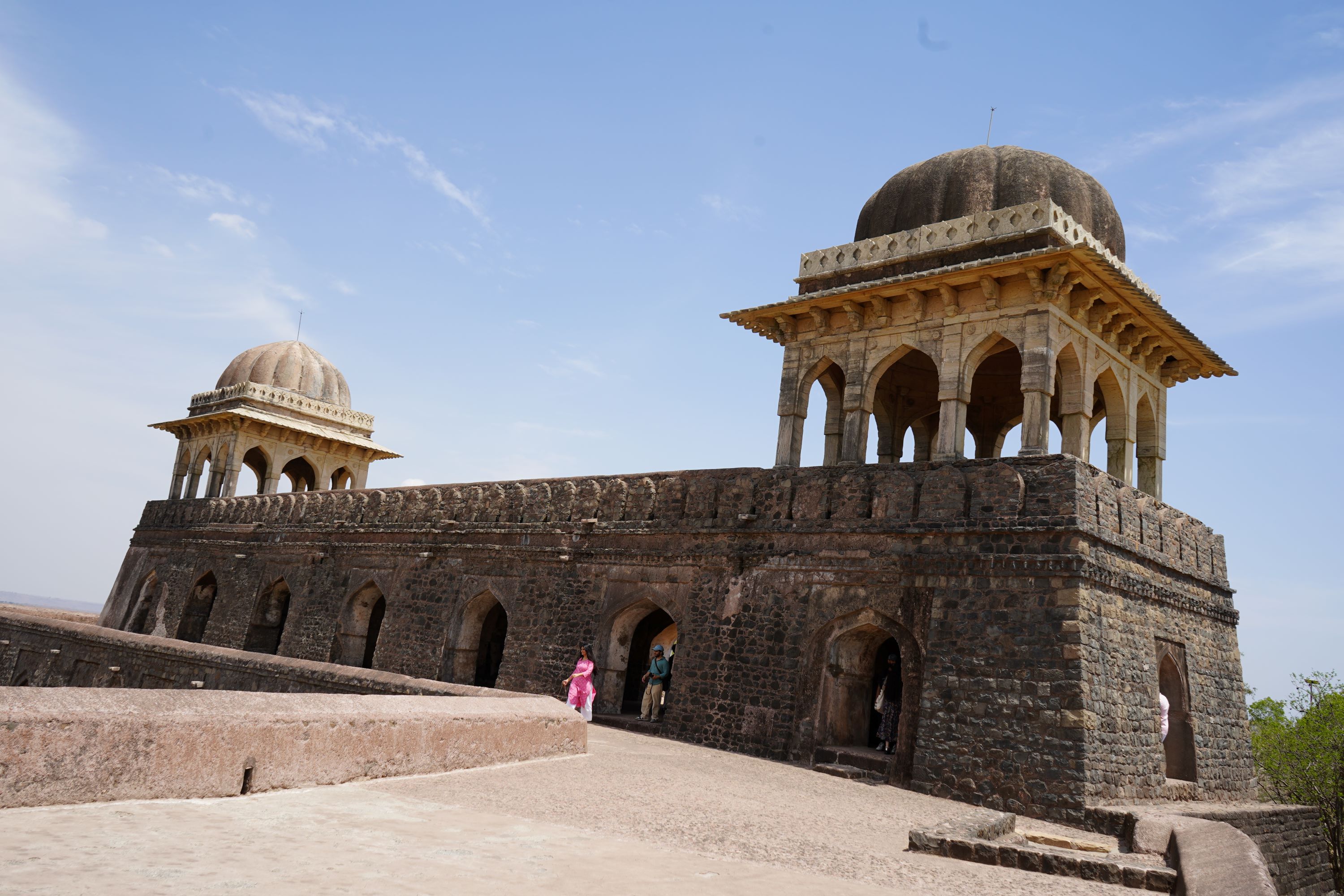
Perched on the very edge of a sheer cliff at the fort's highest point sits the Roopmati Pavilion. The Sultan built this high, arched observatory specifically so his queen could gaze down at the sacred Narmada River winding through the distant Nimar plains, a sight without which she refused to break her daily fast.
Yet, like Chittor, Mandu could not escape the hungry eyes of the empires below. When Akbar’s imperial army marched upon the plateau, Baz Bahadur’s forces were swiftly broken, and the Sultan was forced to flee. Rather than be captured by the invading general, Rani Roopmati consumed poison, setting her love in stone and ending Mandu's golden age.
The Monsoon Resurrection: Ghost Cities Reclaimed
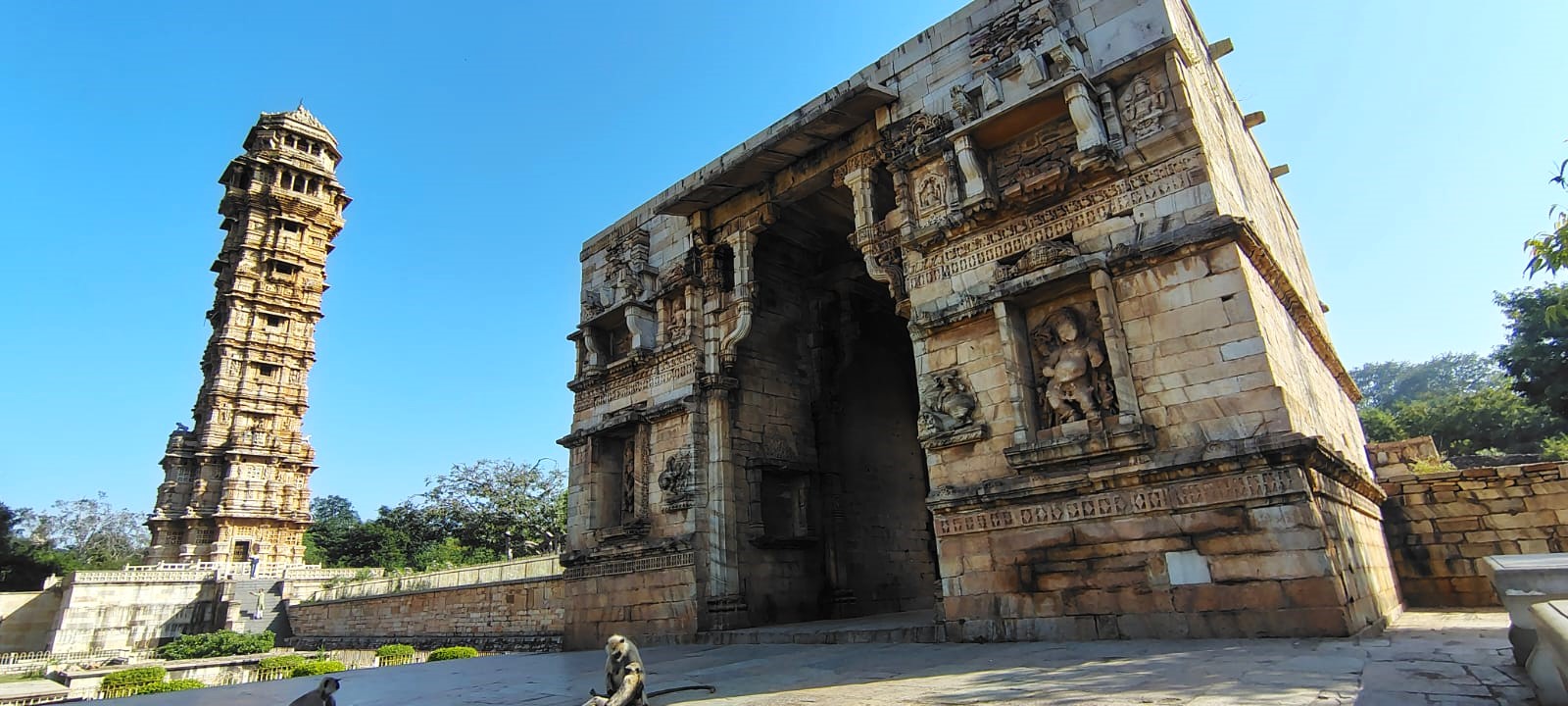
Today, both Chittorgarh and Mandu exist as exquisite, open-air museums of the human spirit. They are ghost cities where the courts have fallen silent and the character of the landscapes has been completely reclaimed by nature. Yet, to travel to them is to realize that they are two sides of the same historical coin.
Chittorgarh stands as India’s ultimate monument to valor, where honor was valued above life itself. Mandu stands as an eternal poem to romance and beauty, where art and love defined an entire kingdom. When the monsoon clouds lower over their ancient battlements, casting a moody mist across the stone towers of Mewar and the floating palaces of Malwa, both towns achieve an identical, haunting perfection.
Chittorgarh Pics credit @triloksalvi
Comments